The Purdue cut flower team is currently conducting cut flower demonstrations at three locations in Indiana. In this article, we provide updates and observations on cool-season flowers from the three sites, including open-field and high-tunnel plantings in Vincennes, an open-field site in Indianapolis, and an open-field site in West Lafayette, representing southern, central, and northern Indiana. The cool-season cut flowers evaluated in the project were started from seed in February and transplanted in March.
At the Vincennes and West Lafayette locations, plants were grown on raised beds covered with plastic mulch, while at the Indianapolis location they were grown on flat beds covered with a fabric weed barrier. Snapdragon, stock and ornamental cabbage were discussed in a previous article. Since then, snapdragon and stock have begun flowering at the West Lafayette location. In contrast, plant establishment and flowering in Indianapolis were substantially delayed due to waterlogging stress during May. This article focuses on the performance of Dianthus and Centaurea, primarily at the southern Indiana location.
Dianthus
Dianthus ‘AmazonTM Neon Purple’ and ‘SweetTM White’, as well as a carnation-type dianthus ‘Chabaud Benigna’ were included in the trial. Plants were transplanted on March 19 in both the high tunnel and open field at the Vincennes location.
‘SweetTM White’ began bloom approximately 7 weeks after transplanting in the high tunnel, and 8 weeks in the open field. In the high tunnel, the first stems harvested in May barely reached12 inches long. But the stem length in general appeared to increase in June, likely due to continued plant growth and increasing day length. Plants grown in the open field were smaller, and harvested stems were less than 12 inches long.
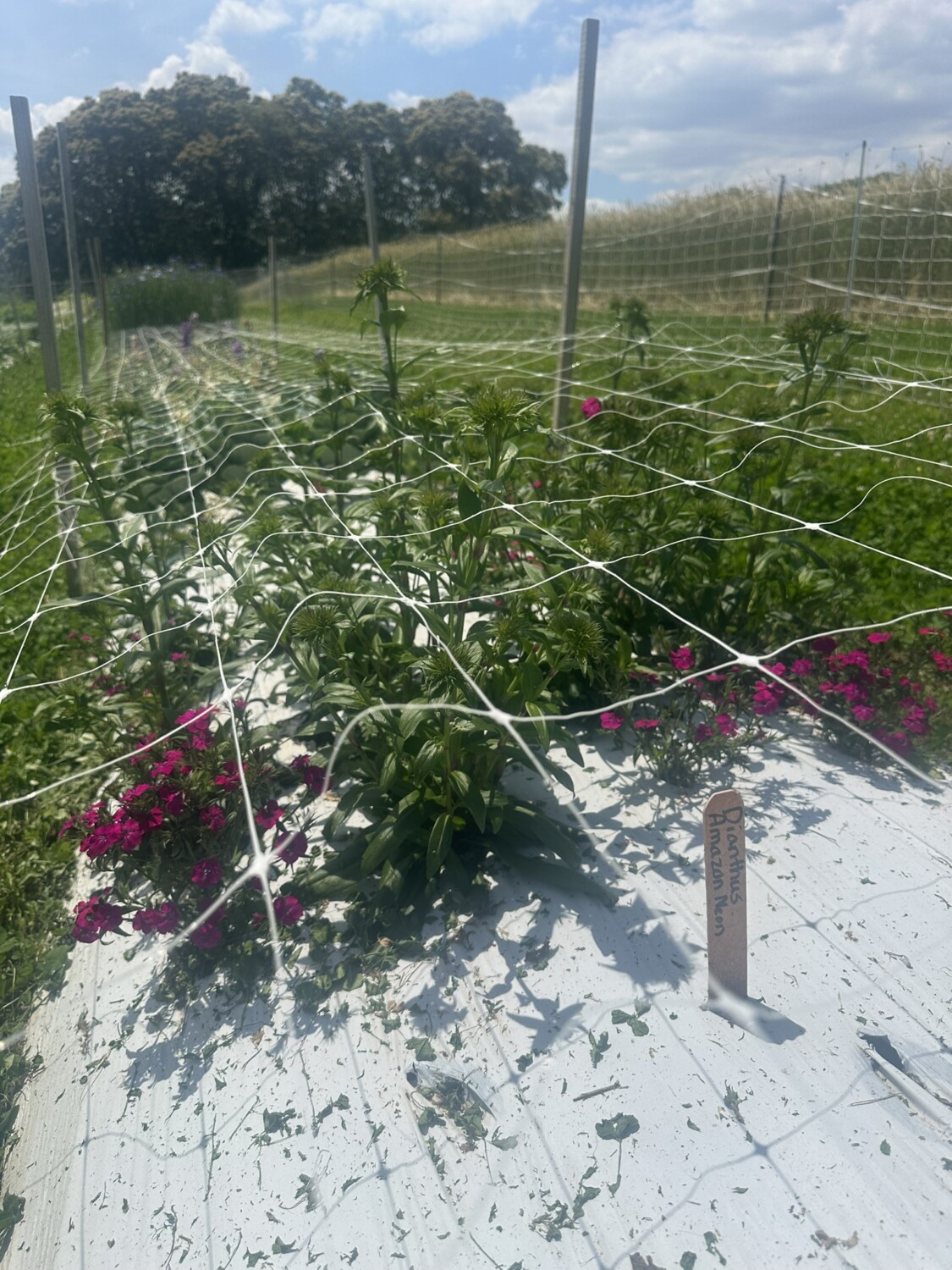
‘Amazon™ Neon Purple’ began flowering in the high tunnel toward the end of May. Compared with ‘Sweet™ White’, ‘Amazon™ Neon Purple’ flowered approximately two weeks later, but produced longer and stronger stems (Figure 1). In the open field, however, plant performance was highly variable. Some plants flowered shortly after transplanting, before sufficient vegetative growth had occurred, while others developed normally and had not yet flowered at the time this article was written (Figure 2). The premature flowering may have been associated with temperature fluctuations following transplanting. A few days after transplanting, plants experienced several nights with light frost, followed by a period of unusually warm weather with daytime temperatures reaching 80°F at the end of March. Approximately 25% of ‘Amazon™ Neon Purple’ subsequently exhibited premature flowering. In our evaluation of multiple cool-season cut flowers grown under the same environmental conditions at the Vincennes location, ‘Amazon™ Neon Purple’ was the only cultivar that exhibited premature flowering. No premature flowering was observed on ‘Amazon™ Neon Purple’ grown at the other two locations. During transplant production, we also observed that ‘Amazon™ Neon Purple’ was prone to premature flowering. We suspect nutrient deficiency and root restriction during the seedling stage may have contributed to floral induction. ‘Amazon™ Neon Purple’ seedlings that had already initiated flowering prior to transplanting were planted in the open field at the Vincennes location. Those plants never returned to vegetative growth and instead continued producing unmarketable flowers.
-
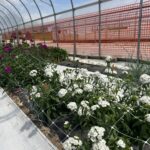
- Figure 1. ‘SweetTM White’ (front) and ‘Amazon™ Neon Purple’ (back) grown in a high tunnel at the Vincennes location. Photo was taken on May 28 (Photo credit: Wenjing Guan)

-
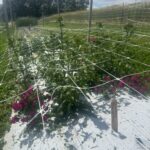
- Figure 2. ‘Amazon™ Neon Purple’ grown in open-field at the Vincennes location. Note some plants flowered before sufficient vegetative growth had occurred. Photo was taken on June 4 (Photo credit: Wenjing Guan).
‘Chabaud Benigna’ grown in high tunnel and open field at the Vincennes location began flowering at approximately the same time, about 11 weeks after transplanting in early June. Although flowering occurred simultaneously, plants grown in high tunnel developed greater vegetative growth and produced longer stems on the initial flowers compared with those grown in the open field. The performance of this cultivar will continue to be monitored and reported in future articles.
Centaurea
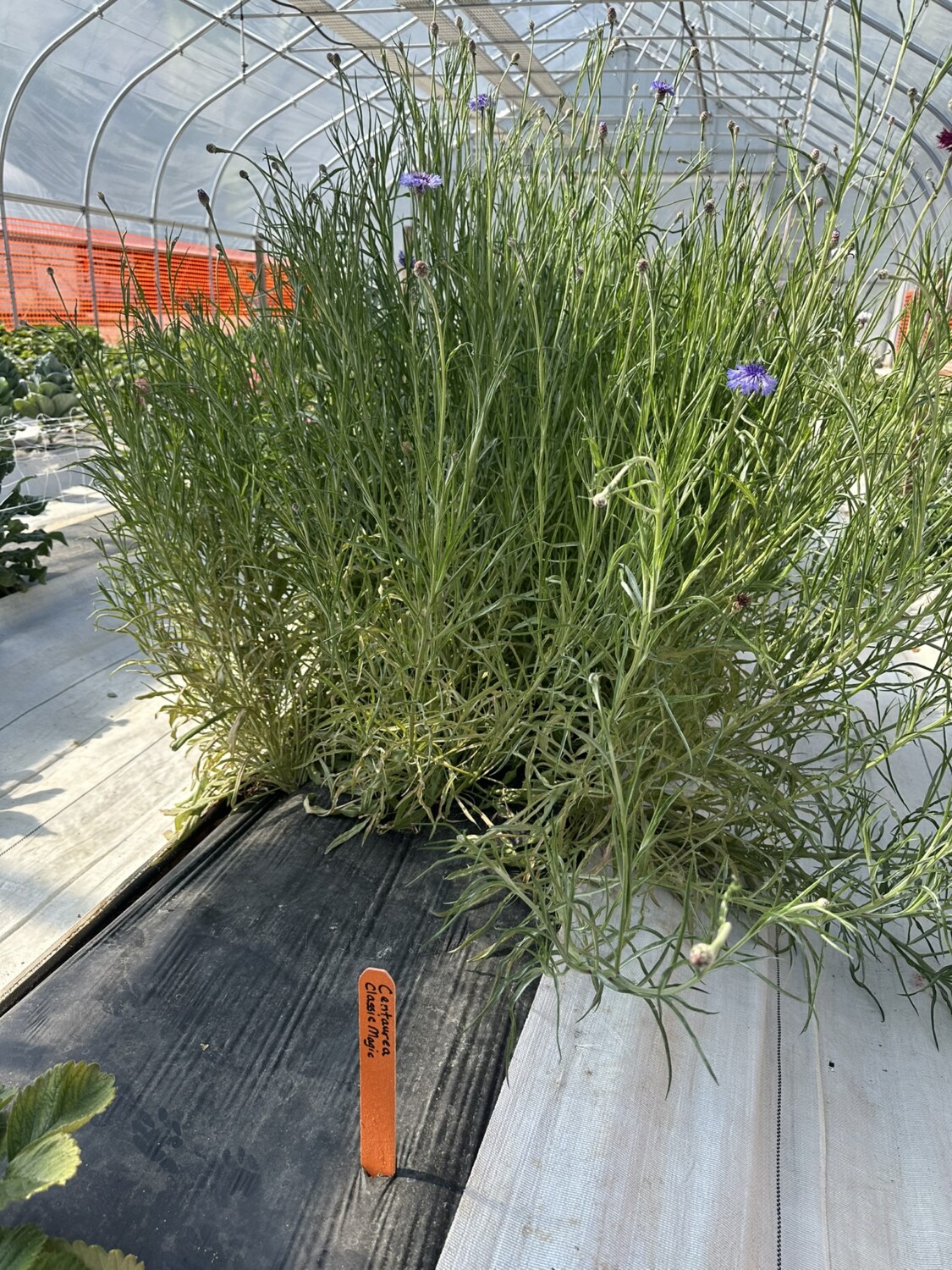
Two Centaurea cultivars ‘Florist Blue Boy’ and ‘Classic Magic’ were included in the evaluation. They were planted in a high tunnel and open field on March 19 at the Vincennes site. Plants grew rapidly, particularly in the high tunnel, where they reached approximately 3 feet in height by middle May. Without support in the high tunnel, some stems lodged and fell to the ground (Figure 3). Cultivar ‘Classic Magic’ began blooming about 8 weeks after transplanting in the high tunnel and 9 weeks in the open field, slightly earlier than ‘Florist Blue Boy’.
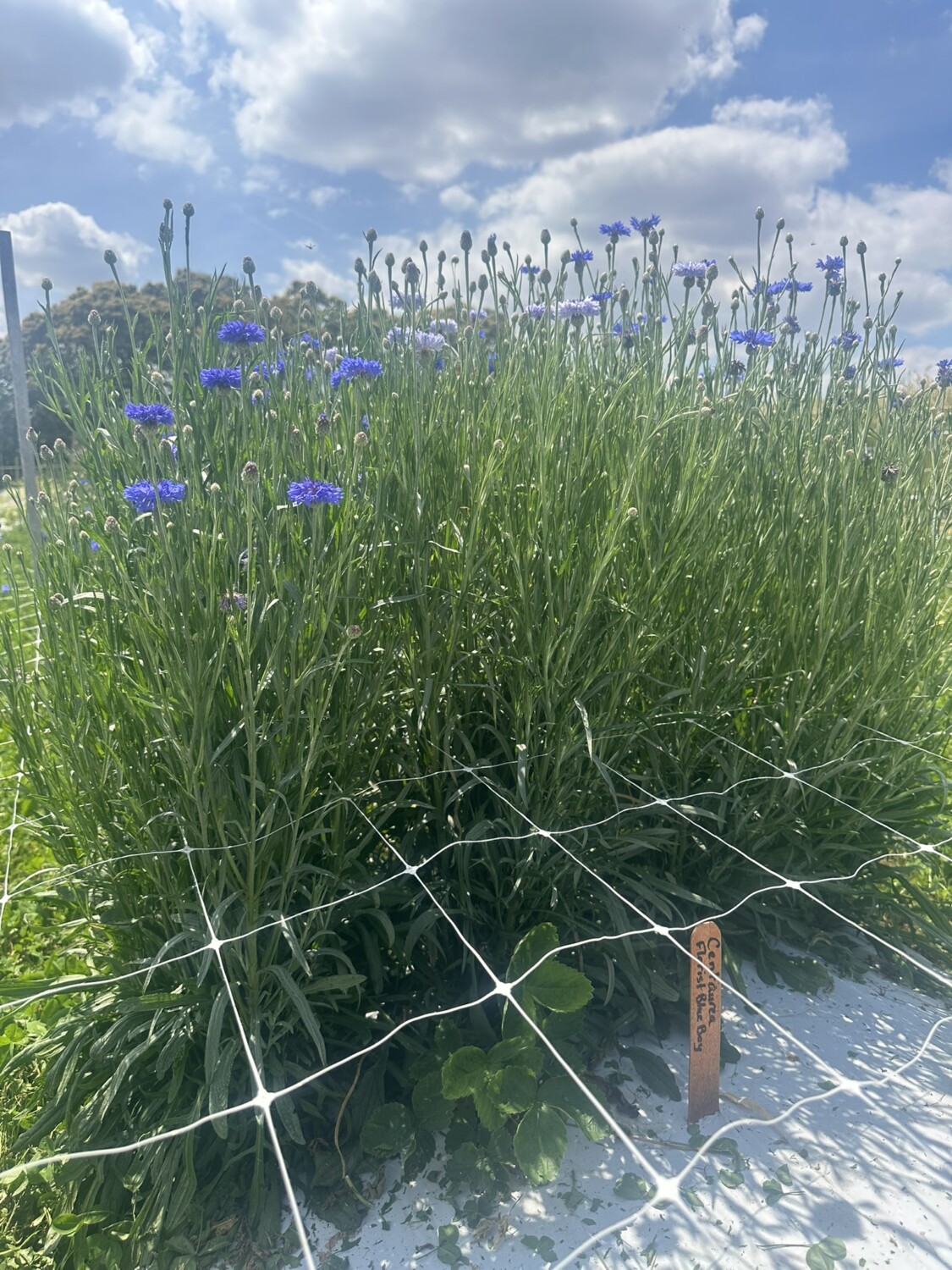
Centaurea was extremely productive in our trials. By late May, we estimated that each plant grown in the high tunnel had approximately 20 open blooms along with numerous developing buds. Despite its high productivity, Centaurea may not be the most suitable cut flower for high-tunnel production. One reason is its relatively low stem value, due to its small flower size and short vase life about 4-7 days. We also observed that Centaurea was highly attractive to two-spotted spider mites. At the Vincennes location, most high-tunnel-grown Centaurea became unmarketable because of severe two-spotted spider mite infestations. In contrast, plants grown in the open field began flowering only slightly later, but plant size was more manageable and the flowers were healthier (Figure 4). At the West Lafayette location, where Centaurea was transplanted at approximately the same time, plants developed slower than those in southern Indiana and began flowering around the end of May.
-
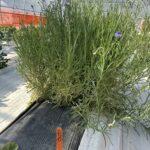
- Figure 3. Some stems lodged and fell to the ground of Centaurea ‘Classic Magic’. Photo was taken on May 11 (Photo credit: Wenjing Guan)
-
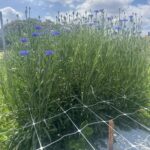
- Figure 4. Centaurea ‘Florist Blue Boy’ grown in open field at Vincennes location. Photo was taken on June 4 (Photo credit: Wenjing Guan)