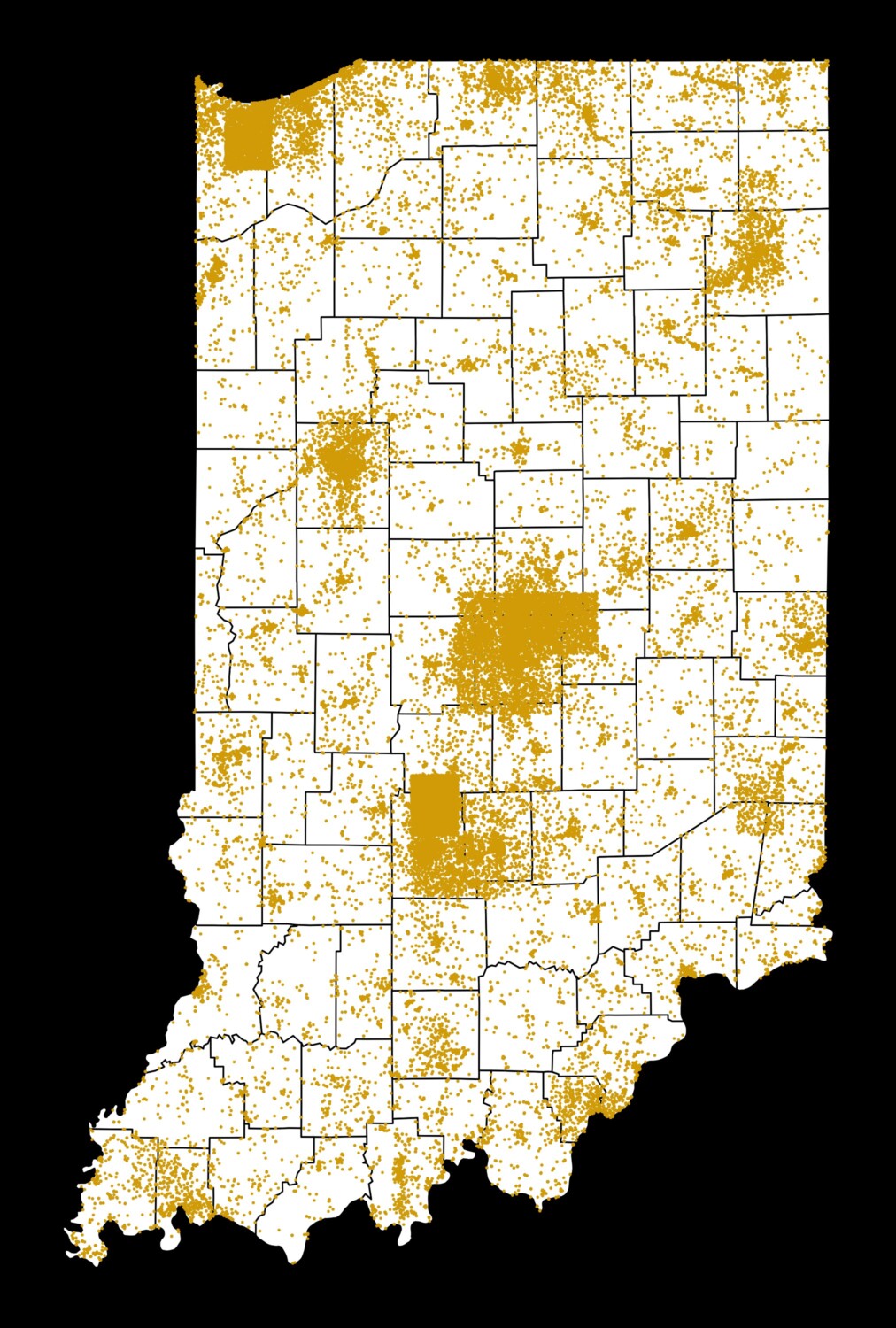
Fig. 1. Map of published insect records for Indiana (data accessed from GBIF.org). These records represent ~150 years of information and come from insect collections, like the Purdue Entomological Research Collection and the Field Museum, as well as observations from sources like iNaturalist.
Insect scientists rely on documented observations of certain insects at specific times and places to understand insect biodiversity and specific pest issues. Interestingly, our records of where insects occur in Indiana are thin, with many regions of the state with little to no data on the map (Fig. 1). Even areas that appear to be well-documented can benefit from more records – we average 5 insect records per square mile in Indiana, yet we know 16,000+ species of insects occur in the state. Your garden, neighborhood park, or even the unmowed area along your fence line may harbor insect biodiversity that is not represented in the scientific record. But you can fill this knowledge gap, by using iNaturalist and your smartphone.
iNaturalist (iNaturalist.org, or the free mobile app) is a platform where anyone can photograph an organism, submit the observation, and have it identified by a combination of image recognition algorithms and a large global community of naturalists. You do not need to know what you photographed before you submit it — in fact, that is what the platform is for! Once an observation receives a confirmed identification from multiple users, it becomes “research grade” and is shared with global biodiversity databases used by scientists, land managers, and conservation organizations worldwide.
How to capture a good insect photo
You do not need special equipment, but a few habits will make your observations more useful:
- Photograph from multiple angles. A single blurry shot is not always identifiable. Get the top, the side, and the “face” of the insect if you can. For small insects especially, do not bring your phone too close to your subject. Instead, you should probably be about 6-7 inches away to make sure the camera has enough distance to focus and generate a sharp photo.
- Let the app record your location. The geographic coordinates attached to each observation are what make it most scientifically valuable.
- Note the habitat and host plant. A beetle photographed on goldenrod is more informative than the same beetle on a white background. What your insect was doing (feeding, resting, mating, etc.) is also worth documenting if you can, either in the photo itself or in the “notes” field of iNaturalist.
- Do not worry about identification. Submit what you found and let the community help.
Why your observations matter — for you and for Indiana
Indiana has a genuinely understudied insect fauna in a landscape that has changed dramatically over the past two centuries. Suburban and residential landscapes are especially underdocumented. Gardeners who plant native species, maintain brush piles, or simply let a corner of their yard go unmowed are almost certainly supporting more insect diversity than the scientific record reflects. Every observation submitted from within the state adds to a picture we are only beginning to assemble. Some of the most useful records are the unremarkable ones. In fact, those records of “common” insects can be incredibly important as we try to understand changes in seasonality and host plant preference.
From a diagnostic standpoint, iNaturalist observations have already proven valuable. Photos submitted by Hoosier homeowners and gardeners have revealed unexpected pests, range expansions, and the occasional new species record in the state. When you photograph the insect on your tomato, or the gall on your oak leaf, you are contributing to the same information network that helps us understand which pest and beneficial insects are moving through Indiana and where.
Building a record of insects on your own property
Beyond contributing to statewide science, iNaturalist is a practical tool for documenting and managing insects in your yard, garden, farm, or orchard. Every observation you post is automatically stored with a date and location, and over time these records build into a personal checklist of the species on your property. That checklist becomes genuinely useful (Fig. 2). For example, when do native bees first appear in your orchard and on which blooms? Are brown marmorated stink bugs active earlier this year than last? Which of your flower beds consistently attract beneficial predators like lady beetles and lacewings, and which seem to draw more pest activity? These are patterns you can track simply by photographing what you find throughout the season.
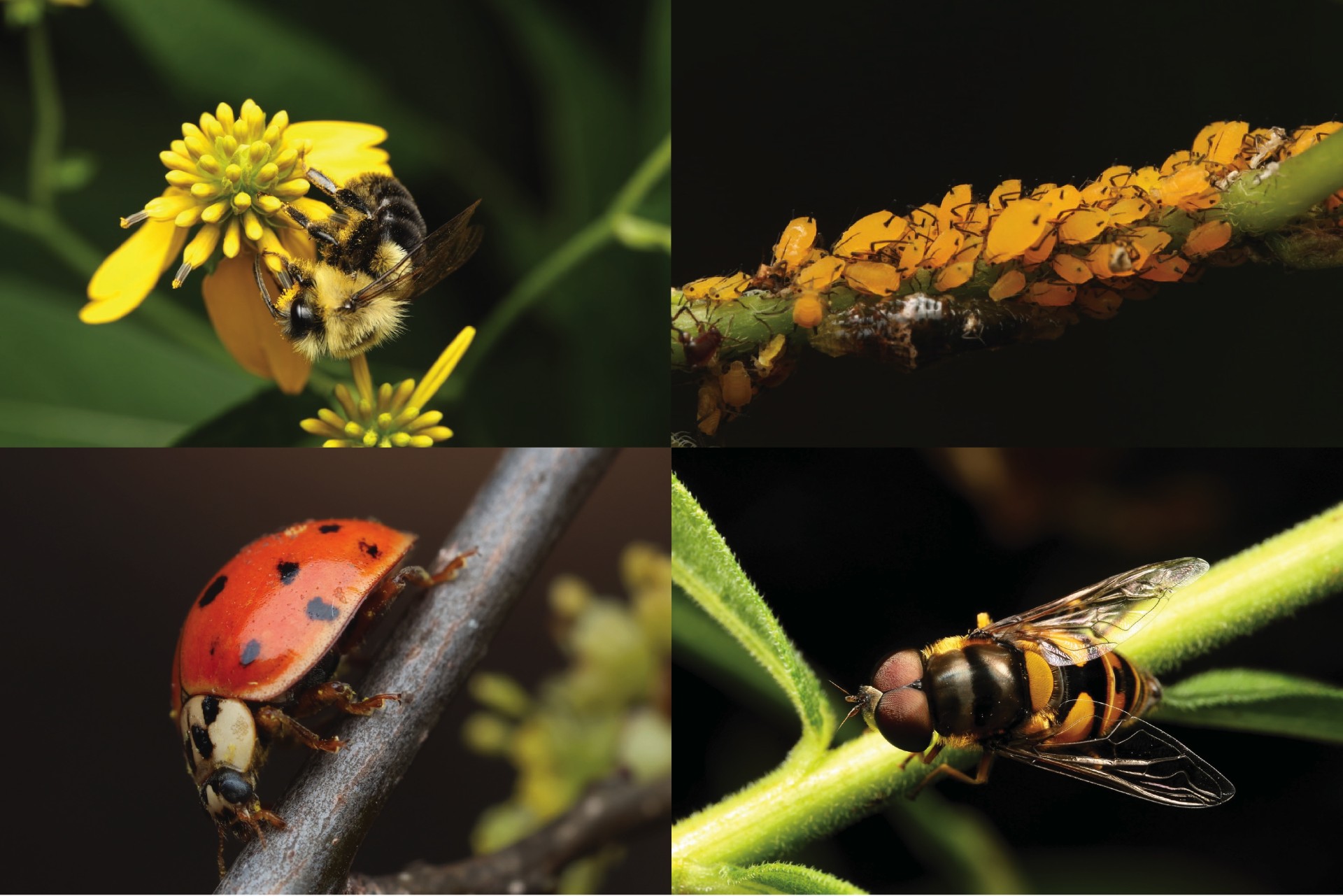
Fig. 2. Examples of insects you might document. Bumble bees (top left) are important pollinators. Aphids (top right) can be problematic pests when numbers are high. Lady beetles (bottom left) can be beneficial insects that help control pests like aphids. Hoverflies (bottom right) might be confused for bees at first but also serve as pollinators as well as important predators of pests. Photos by A. Johnston.
Get started this season
The best time to begin is whenever insects are active, which in Indiana means roughly April through October. Start in your own yard or a local park and begin to build a checklist. Flowering plants, native and nonnative alike, are reliable hotspots of insect activity. Porch lights on warm nights attract an astonishing diversity of moths and beetles worth photographing. Turning over logs or looking under loose bark takes only a moment and often reveals species that are never seen otherwise.
If you find something you cannot identify and want a professional opinion, the Purdue Plant & Pest Diagnostic Lab is always available for submissions. But for general nature documentation, iNaturalist and its community of experts will take you a long way.