If you had problems with fire blight last year, this is for you: The best preventative measures for fire blight are the application of streptomycin at bloom to prevent blossom blight and the application Apogee at petal fall to reduce shoot blight. Yes, Apogee is expensive. It is worth every single penny. Apply streptomycin just…Read more about Fire Blight[Read More]
Disease Management
Calculate the 77 days to harvest date for each of your cultivars and make the final application of EBDC fungicide (Dithane M-45, Manzate 200, Penncozeb, Polyram, Roper) on that date to take full advantage of the excellent control these fungicides provide for bitter rot, black rot, and white rot, in addition to sooty blotch and…Read more about EBDC Timing for Bitter and Summer Rot Control[Read More]
The Midwest Fruit Pest Management Guide is updated each year by the Midwest Fruit Workers group to provide the most complete information and recommendations for controlling weeds, diseases and insect pests of all major fruit crops grown in the Midwest. For the past three years, the guide has combined information on tree fruit, small fruit…Read more about Midwest Fruit Pest Management Guide (ID-465) available[Read More]
Anthracnose, caused by Elsinoe veneta, is a common fungal disease on black raspberries and some blackberries. It is much less common on red raspberries. Most modern thornless blackberries (Apache, Triple Crown, Osage, Ouachita, etc) are resistant to anthracnose. Most black raspberry cultivars are highly susceptible. If you grow a susceptible variety, is is important to…Read more about Anthracnose on Blackberries and Black Raspberries[Read More]

Check list: ~Indiana Disease management program for apples for 2018 is available at: https://www.extension.purdue.edu/extmedia/BP/BP-201-W.pdf This information is identical to the Midwest fruit pest management guide, but provided in a table format and includes Fungicide Resistance Action Committee (FRAC) Codes, REI, PHI and efficacy information for each product (Fig. 1). ~Reducing overwintering inoculum for apple scab:…Read more about Forewarned is Forearmed[Read More]
For those of you lucky enough to still have a peach crop: Early shuck-split and shuck-fall sprays are critical for peach scab control. The first spray should be applied about one week 30after petal fall. Do not wait until the shucks have slipped to begin this program.
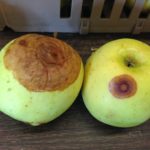
Summer rots continue to rear their ugly heads (Fig. 1). This year, we are even seeing them on late season apples like Evercrisp (Fig 2) and GoldRush. On the plus side, we are seeing some level of control with all fungicides in our trials (data will be presented at the Indiana Hort Congress); unfortunately,…Read more about Rot Redux[Read More]

Powdery and downy mildew can develop on grapes in the late season, post harvest. It is important to keep vines as healthy as possible going into winter. With the long fall we are experiencing, downy and powdery mildew are both becoming prevalent in many vineyards. Growers should consider a late season application of fungicides to…Read more about Late Season Leaf Diseases of Grapes[Read More]

Crown gall is a common disease of many perennial plants. It causes fleshy tumors to develop on the plant and usually results in plant death. Grapes are among the most sensitive fruit crop to crown gall. The disease is caused by the bacterium Agrobacterium tumefaciens. This is the same bacterium that is used to genetically…Read more about Crown Gall of Grape Vines[Read More]
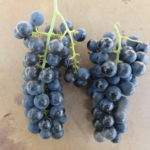
There are a number of common grape pathogens that can cause fruit rots each year in the region. Black rot and Phomopsis cane and leaf spot are by far the most common fruit pathogens. We also see Botrytis gray mold on some cultivars in cooler regions and years. Another common rot is Sour rot, but…Read more about Ripe Rot on Grapes[Read More]