Both plug plants and bare-root plants can be used to establish plasticulture strawberries. Regardless of the type of planting material used, however, proper planting depth is critical. Planting too deep or too shallow can result in poor establishment or even plant death. I have observed both problems during recent farm visits.
Planting Strawberry Plugs Too Deep
Unlike many vegetable crops, such as tomatoes and melons, strawberries have their growing point at the crown, near the base of the plant. This makes proper planting depth particularly important.
Water-wheel transplanters, commonly used by vegetable growers, are also used to plant strawberry plugs. However, it is not always easy to judge planting depth when using a water-wheel transplanter. With many vegetable transplants, planting deep is not a concern because the growing point remains well above the soil surface. With strawberries, however, planting too deep can bury the crown and growing point. A buried growing point may prevent new leaves from emerging and can eventually lead to establishment failure. To ensure proper planting depth, it is helpful to have someone walk behind the transplanter and regularly check newly planted plugs. If plants are set too deep or too shallow, the person can promptly communicate with the planting crew so adjustments can be made before a large portion of the field is planted incorrectly.
Planting Bare-Root Strawberries Too Shallow
The opposite problem can occur. I observed the problem in a situation where bare-roots were planted in the summer. The plants initially established and grew well, but later some began to wilt. In some cases, entire plants died; in others, portion of the branch crowns declined.
Upon closer inspection, I noticed that the main crown, or portions of the branch crowns, were positioned above the soil surface. This can limit the plant’s ability to grow new roots from crown, which may contribute to wilting and plant decline. Even if plants with exposed crowns continue to grow during the fall, these crowns are less likely to survive in the winter.
One factor that may contribute to this problem in plasticulture systems is heavy rainfall after planting. During intense rainfall, water flowing into the hole may wash soil away from the crown. This means that even when bare-root strawberries are initially planted at the correct depth, their crowns may become exposed later. For this reason, growers should check plants again after heavy rainfall, particularly during the first several weeks after planting. If crowns have become exposed, soil should be carefully moved back around the plants.
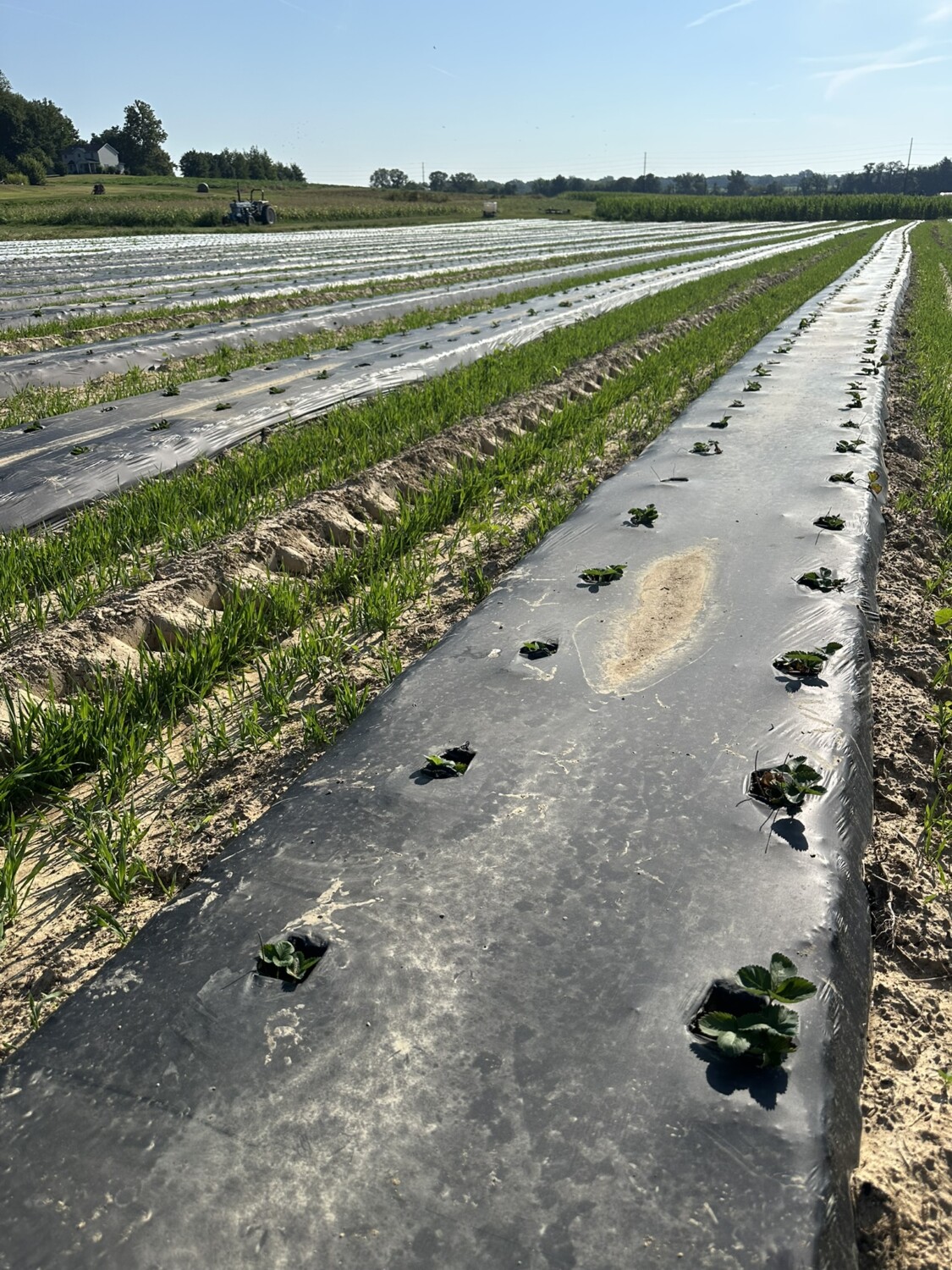
Newly planted strawberries on plastic-covered beds
Additional Reading
Considerations of Using Plugs or Bare-root Plants to Start a Plasticulture Strawberry Patch