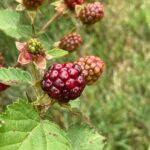
Bramble Fruit

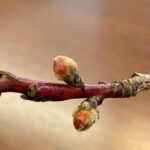
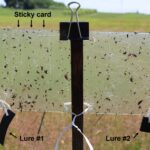
Just a reminder to all fruit producers to organize and prep your fruit insect monitoring tools for the upcoming season! Depending on your fruit crop and location in the state, there’s a suite of fruit insects that are important for you to track, including moths, aphids, scales, stink bugs, fruit and vinegar flies, and…Read more about Don’t forget to prep your fruit insect monitoring tools for 2022![Read More]
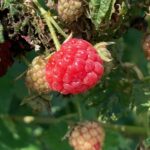
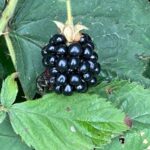
Tissue analysis is the most reliable means of determining plant nutritional status. Combined with soil testing, tissue analysis can help pinpoint the source of problems and determine what measures may be needed to ensure proper nutrition of the crop. Tissue analysis samples should be collected at the appropriate time to give the most meaningful results….Read more about Tissue analysis for grapes & small fruit[Read More]

Updates on Spotted-wing Drosophila (SWD) activity in Indiana blueberries Zihan (Lilac) Hong and Elizabeth Y. Long, Purdue Entomology Summer is a time we always look forward to delicious fresh fruit! According to the 2017 USDA Census of Agriculture, 150+ farms grow some 600 acres of blueberries in Indiana! Some common varieties include Bluecrop, Bluejay, Blueray,…Read more about Updates on Spotted-wing Drosophila (SWD) activity in Indiana blueberries[Read More]
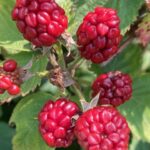
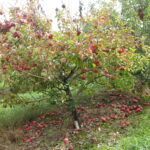
Throughout Indiana orchards, Phytophthora root and crown rot continues to be a major cause of tree death (Fig. 1), and losses in small fruit, as well (Fig. 2). The disease is caused by the several members of the genus Phytophthora, and includes (but is by no means limited to) the following species): P. cactorum, P….Read more about Recent Rains Driving Phuture Phytophthora Problems[Read More]