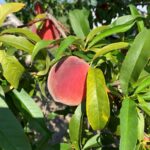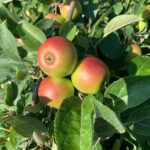
At the Meigs Horticultural facility on April 24th we experienced freezing temperatures from 2 am until 7 am, with a low of 26.8 degrees Fahrenheit for one hour. The damage to fruit crops on the farm is scattered depending on varieties. A rough estimate would be 10% cold damage on the crops. The growth stages…Read more about Crop Conditions[Read More]
Grapes
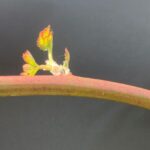
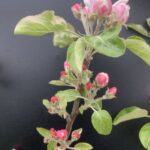
In just two weeks there has been significant bud development on our fruit trees here in Lafayette, IN. Our Shiro Plums are in full bloom and the bees are busy pollinating these trees. There is one Apricot and some early season Apple trees in our mixed variety blocks that are also in full bloom. All…Read more about Crop Conditions[Read More]
As we continue to walk on really expensive eggshells in 2023, it’s important to recognize that fungicide availability along with the effectiveness of available fungicides (and their price) will impact orchard, vineyard and berry patch management 2023. For all growers, the number 1 problem continues to be fungicide resistance in a diversity of fruit crops….Read more about Fungicide resistance in a diversity of fruit crops[Read More]
Purdue Extension presented its first Fruit, Vegetable and Hemp Field Day post-pandemic at the Meigs Ag Center in July 2022. Extension Specialists and Graduate Students presented specialty crop research to 45 attendees. Attendees had only good things to say about the event. ” Great information and research.” “Great variety of experiences and knowledge.” “I felt…Read more about Purdue Fruit and Vegetable Field Day – July 20, 2023[Read More]
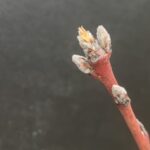
We have had a warm winter and early spring, except for the negative temperatures we experienced right before Christmas. Some fruit crops are already beginning development in Lafayette, Indiana. Apples remain dormant except for some of the Honey Crisp blocks showing Silver Tip and a few Crab Apple varieties showing Green Tip. Majority of the…Read more about Crop Conditions[Read More]
The Tools: Hand lens-10x or 15x -To correctly use a hand lens, place the lens directly in front of your eye and bring the sample you are examining towards the lens until the object comes into focus. Knife – good for cutting into stems or root tissue. Pruning shears- for taking samples – disinfest blades…Read more about Scouting 101[Read More]
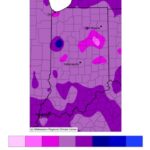
Extreme cold temperatures were experienced across the state on December 23-24th 2022 (Figure 1). Temperatures ranged from -10- -5° F across most of the state with temperatures dipping below -10°F in some areas. Since then, there have been some additional cold events, such as 7° F on January 31-February 1 and 12° F on March…Read more about Cold Weather Impact on Grapevines[Read More]