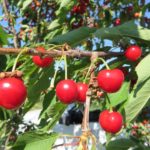
In Lafayette, fruit crops are progressing normally. Strawberry harvest is winding down and quite of bit of leaf spot is showing up. We have our first ripe fruit on summer red raspberries. All brambles are showing signs of freeze damage from the mid-March event. Weak and collapsing fruiting laterals are common. Grapes are from late…Read more about Crop Conditions[Read More]
Stone Fruits
The Office of the Indiana State Chemist has filed a Notice of Intent to Adopt a New Rule that will make most dicamba containing herbicides Restricted Use Products (RUP). This designation will allow the OISC to track sales of those herbicides. As many specialty crop growers know, dicamba is one of the growth regulator herbicides…Read more about Dicamba Public Comment Period and Hearing[Read More]
Grapes are at the 8-10 inch shoot stage in southern Indiana and 6 inches or less in northern Indiana. Brambles are blooming in the south and approaching first bloom in central and northern areas. Blueberries are at petal fall to full bloom across the state. There are a few reports of damage to grapes and…Read more about Crop Conditions[Read More]
WASHINGTON, Mar. 15, 2017 –America’s farmers and ranchers will soon have the opportunity to strongly represent agriculture in their communities and industry by taking part in the 2017 Census of Agriculture. Conducted every five years by the U.S. Department of Agriculture’s (USDA) National Agricultural Statistics Service (NASS), the census, to be mailed at the end…Read more about Census of Agriculture Countdown Begins for America’s Farmers and Ranchers[Read More]
Eastern Indiana Fruit Growers Association Hosting Orchard Garden tours at the “Slice of Paradise” 3912 S. Felton St., Marion, IN. Tuesday, May 23 at 6:30pm Dr. Rick Foster from Purdue University will be in attendance For more information, call 765-661-4597 Indiana Horticultural Society Field Day June 28, 2017 Tuttle Orchard Greenfield, IN More details to come but…Read more about Upcoming Events[Read More]
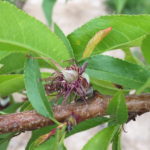
Grapes have grown quickly this past week and most varieties are now past bud burst. The earliest have 4 to 6 inch shoots at this time. Blackberries and raspberries are also growing rapidly, with new primocanes emerging from the ground and laterals on floricanes out to 4 inches or longer. Flower buds are visible on…Read more about Crop Conditions[Read More]

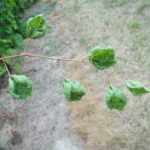
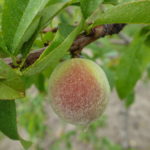
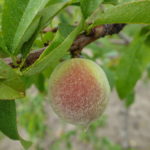
It isn’t every year we get our peach trees to produce, but when we do, we want to make sure we get them to harvest! One of the most important sprays to protect peaches from leaf curl (Fig. 1) should have gone in late fall (best time) or in late winter (by end of February),…Read more about Protecting Peaches[Read More]
Codling moths are flying in some parts of the state. Place your pheromone traps in the orchard during bloom. I have not yet caught any in my traps but expect to soon. We define biofix as the first sustained flight of moths. Therefore, we don’t determine biofix when that first moth shows up in the…Read more about Codling Moth[Read More]