I hope the growing season is going well for all fruit producers! For this issue, I am sharing a quick update on what we’re seeing in pheromone-baited monitoring traps placed in orchards at the Purdue Agricultural Center in Lafayette, Indiana (Tippecanoe County), as well as orchards of collaborating Indiana growers (thank you!) in Tippecanoe and…Read more about Updates on Codling moth, Oriental fruit moth, and Spotted-wing Drosophila captures in pheromone-baited monitoring traps[Read More]
Tree Fruit
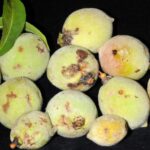
Some of our readers may have small, backyard orchards, or even just a couple of fruit trees (or vines, canes, and bushes!), that you enjoy for the aesthetics and also the fruit! If you’re like me, you’re thinking that having just a few fruit trees to manage won’t be so hard, and the effort will…Read more about Choosing insecticides to manage insect pests in your home/backyard orchard[Read More]
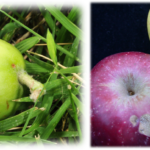
The plum curculio (Conotrachelus nenuphar) is a small “snout” beetle (also known as a weevil – one of my favorite beetle groups!) that will feed on apples, peaches, pears, plums, and cherries. Both adults and larvae have chewing mouthparts and can damage fruits; adults by feeding and laying eggs in newly set fruit and larvae…Read more about Tips for managing plum curculio in tree fruit[Read More]
Purdue Extension presented its first Fruit, Vegetable and Hemp Field Day post-pandemic at the Meigs Ag Center in July 2022. Extension Specialists and Graduate Students presented specialty crop research to 45 attendees. Attendees had only good things to say about the event. ” Great information and research.” “Great variety of experiences and knowledge.” “I felt…Read more about Purdue Fruit and Vegetable Field Day – July 20, 2023[Read More]
Join us for the Indiana Horticultural Society Summer Meeting Beasley’s Orchard, Danville, IN July 18 All are invited More details to come.
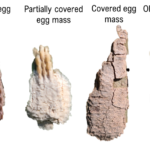
As of March 2022, Indiana has one known county with a confirmed Spotted Lanternfly (SLF) population: Switzerland County (Figure 1). Penn State University has created a SLF egg hatch prediction map that estimates the emergence of the first SLF instar based on temperature conditions (Figure 2). Please note: this map does not show where SLF…Read more about Spotted Lanternfly Nymphs Hatch Begins[Read More]
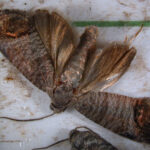
Depending on where you are in the state, your fruit trees may be nearing the end of petal fall or already beginning fruit set! This is an important time to pay close attention to your pheromone-baited monitoring traps for captures of codling moth (Figure 1) that you are all likely familiar with. You’ve likely already…Read more about It may be time to begin codling moth management in your orchard[Read More]
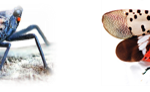
We were all hoping it would happen later, but unfortunately the spotted lanternfly (SLF) (Lycorma delicatula) (Figure 1), an invasive planthopper with a piercing-sucking feeding strategy, was officially detected in Vevay, Indiana (Switzerland County) for the first time in July 2021. You can see pictures and read more about the detection at the Indiana Department…Read more about Spotted lanternfly has been detected in Indiana[Read More]
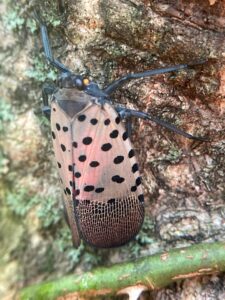
Adapted from IDNR Press release and Purdue Landscape Report The Spotted Lanternfly (SLF) has been found in Indiana A homeowner in Vevay, IN contacted DNR’s Division of Entomology & Plant Pathology (DEPP) last week with a picture of a red immature stage near their home. DEPP staff surveyed the site and discovered an infestation…Read more about Spotted Lanternfly found in Indiana[Read More]
I am a bit late on the topic of bees for fruit pollination, especially tree fruit, but I wonder how many readers use or maintain spring mason bees for pollination of tree fruits? If not for pollination, then perhaps just for fun? (Figure 1). If not, you might consider this for next season! Those who…Read more about Mason bees (for fun!) and fruit pollination, anyone?[Read More]