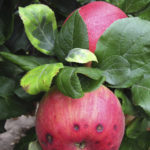
With weird weather often comes weird physiological disorders (on top of our summer fruit rots). Often confused with hail injury, disease or insect damage, these physiological disorders are marring the appearance of many apples. Symptoms of bitter pit include circular or even irregular sunken spots on the fruit surface, beneath brownish or streaked dead regions…Read more about Physiological Disorders[Read More]
Disease Management
ReTain (AVG) is a plant growth regulator that blocks the production of ethylene. When ReTain is applied to apple, several ripening processes are slowed, including preharvest drop, fruit flesh softening, starch disappearance, and red color formation. In order for ReTain to be effective it must be applied well in advance of the climacteric rise in…Read more about Timing Retain Sprays[Read More]
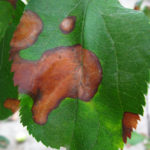
Glomerella leaf blight seems to be rearing its ugly head. Symptoms include lesions with concentric rings in them that can grow together and give the leaf a blighted appearance (Fig. 1). Leaves may yellow and fall off (Fig. 2) and may appear like Golden Delicious necrotic leaf blotch on a variety of apple cultivars (Fig….Read more about Glomerella Leaf Blight[Read More]
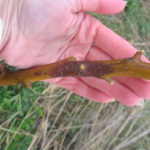
Diseases that affect the twigs, branches, and the main trunk of a tree are referred to as cankers or blights. Canker diseases can be a serious problem in the orchard, vineyard, berry or bramble patch when they are not properly managed, and even when they are. All woody plants can be infected by canker pathogens….Read more about Opportunistic Canker Pathogens[Read More]
Grapes across the state are post bloom a week or more. As berries reach 3 to 5 weeks post bloom they become naturally resistant to infection by black rot and powdery mildew fungi. So our spray program can relax a bit. Growers normally extend to a 14 to 21 day schedule supported by regular scouting….Read more about Grape Pest Management[Read More]
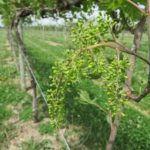
We’ve had some weird weather this year. April was cool and crop growth was delayed. But once May arrived, warm conditions lead to rapid development of fruit crops. We are now about “normal” in development. That means that grapes in the southern half of the state are nearing the pre-bloom stage, which is a key…Read more about Important Pre-bloom Sprays for Grapes[Read More]
We’re getting close to the time when growers need to make chemical thinning decisions – for many the most perplexing and risky decision they will make all year. Even with a relatively mild spring without too much interference by spring frosts, this is a tricky call to make. In most cases, there are plenty of…Read more about Apple Chemical Thinning[Read More]
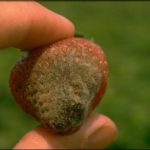
Gray mold, caused by Botrytis cinerea, is the most common disease of strawberries. Managing this disease can be challenging if rainfall occurs during flowering. This year has been relatively dry, so hopefully there will be less disease pressure. Nevertheless, growers should consider fungicide applications to prevent gray mold infections. Timing of applications is critical. Botrytis…Read more about Gray Mold Management in Strawberries[Read More]
There are some potential pest and disease problems that require early season sprays. Phomopsis is a major problem on many grape varieties in the Midwest. Mancozeb should be applied starting at 1-3 inch shoots and repeated each 7-10 days, especially prior to a predicted rain event. Evaluations of delayed-dormant fungicide applications for management of this…Read more about Early Season Sprays for Grapes[Read More]
Temperatures below -15°F generally kill powdery mildew infected buds. For those of you who had a milder winter, protecting susceptible varieties like Jonathan, Ida Red, Enterprise, Staymen, Granny Smith, and Ginger Gold, be sure to protect at tight cluster, pink, bloom, petal fall and first cover. Remember that fungicide protection is needed until terminal buds…Read more about Powdery Mildew[Read More]