
Many readers will remember when a massive brood of periodical cicadas (Brood X) emerged throughout Indiana back in 2021. With their dark bodies, red eyes, and orange wings, these insects look like something straight out of the X-files, am I right?? There was lots of noise (male cicadas singing for the females!), lots of cast…Read more about They’re baaaaack: Rare double brood emergence of periodical cicadas this year[Read More]
Insect Management

REGISTRATION NOW OPEN! We are happy to announce that Purdue Extension is presenting its annual Fruit and Vegetable Field Day on July 18, 2024, at the Throckmorton/Meigs Horticulture Farm, Lafayette, IN. Register here: Purdue Fruit and Vegetable Field Day Contact Lori Jolly-Brown or Petrus Langenhoven if you have any questions. Presentations: Julia Wooby, Ian Kaplan, Laura Ingwell Trap Crop…Read more about Purdue Fruit and Vegetable Field Day[Read More]
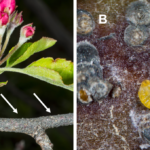
San Jose scale attacks all the delicious fruit trees: apple, peach, pear, and plum. Some of you may already know that this insect is particularly difficult to manage, because most life stages are very small, even tiny, so they are not obvious until there are lots of them! In fact, you’re going to need a…Read more about Tips for managing San Jose scale in tree fruit[Read More]

As we head into the strawberry season, I anticipate more questions from growers when it comes to pests that directly damage the fruit. One that was reported recently was the Strawberry sap beetle. This beetle belongs to the family Nitidulidae, which are broadly referred to as sap or picnic beetles. The Strawberry sap beetle overwinters…Read more about Strawberry sap beetles (Stelidota geminata)[Read More]
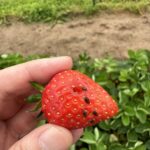
Removing overwintering leaves on plasticulture strawberries in the early spring is a time-consuming and labor-intensive job. I was asked whether the effort is worthwhile. I want to share my observation that confirms it is worth the effort. We conducted a comparative study on second-year plasticulture strawberries at Southwest Purdue Ag Center in Vincennes, IN. In…Read more about Why You Should Remove Old Leaves on Plasticulture Strawberries[Read More]
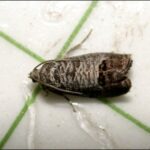
Each spring, I know some of you may be using insect-pest monitoring traps for the first time, whether it’s in your orchard or backyard! It’s exciting to have these tools – they do the work for you, luring insects into a single location so you don’t have to guess when pests might appear. Moreover, you…Read more about How to setup monitoring traps for tree fruit insect pests, like codling moth[Read More]
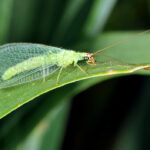
Lacewings are a group of insects commonly found in Indiana and throughout the world. There are several species, but the most common that you will see in Indiana include the green lacewing and the brown lacewing. They belong to a unique order of insects, Neuroptera, and are commonly referred to as aphid lions. The life…Read more about Insect Spotlight: Lacewing (Chrysoperla carnea)[Read More]
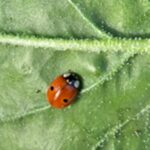
The Two-spotted lady beetle, Adalia bipunctata, is a common insect predator, meaning it feeds on other, smaller bugs. Native to North America and Europe, the Two-spotted lady beetle is distinguished from other lady beetles by its oblong shape and two large black spots on either of its back, as well as its large white spots…Read more about Insect Spotlight: Two-spotted lady beetle[Read More]
Overwintering strawberries in high tunnels can jumpstart plant growth in the spring and protect developing flowers from frost damage and disease. However, this protected environment is also ideal for some pests, like spider mites and aphids, that can successfully overwinter and build their populations. We conducted an experiment on ‘Chandler’ strawberry where it was grown…Read more about Overwintering insects on high tunnel strawberry and impacts on yield[Read More]
In Indiana, our ‘normal’ or average weather is one of extremes, punctuated with an occasional glorious summer day of sun and 76 degrees F. This year has been one of flooding and droughts, freezes and scorching heat. Again. With these weather extremes come physiological disorders and summer fruit rots, for those lucky enough to even…Read more about Pits, Spots and Rots[Read More]