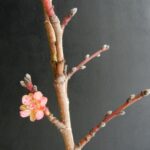
There has been a lot of movement just in the last two weeks. We are seeing a lot of trees about to flower or in full flower. The grapes are swelling and some early varieties are at bud burst. Our field Strawberries are at tight bud or popcorn stage now. The Strawberries in the high…Read more about Crop Conditions[Read More]
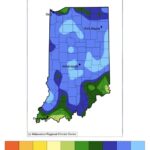
Something exciting happened this past Monday that many of you might be glad is over and no longer filling your news feed – the total solar eclipse. The Indiana State Climate Office, however, is now getting a chance to dig into the data collected from the Purdue Mesonet – a collection of 14 weather stations…Read more about Weather impacts from eclipse[Read More]
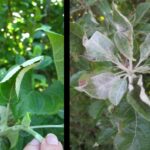
All that new, succulent growth needs to be protected to prevent primary (and even secondary!) scab (Fig. 1). We’re past the point where copper can be safely used, so protectant fungicides for scab control at this stage include mancozeb, ziram and captan. As an added bonus, all of these protect against the summer rots, and…Read more about Apple Disease Management Notes for April[Read More]
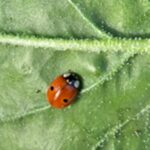
The Two-spotted lady beetle, Adalia bipunctata, is a common insect predator, meaning it feeds on other, smaller bugs. Native to North America and Europe, the Two-spotted lady beetle is distinguished from other lady beetles by its oblong shape and two large black spots on either of its back, as well as its large white spots…Read more about Insect Spotlight: Two-spotted lady beetle[Read More]

Happy spring everyone, and I hope you’re all looking forward to another productive growing season in the Hoosier Heartland! As I did last year, I’d like to invite our readers to suggest, or vote for, insect-related topics that you’d like to learn more about this year! I did receive a few helpful topics last year,…Read more about Request (or vote!) for a fruit-insect topic you’d like to see in Facts for Fancy Fruit in 2024[Read More]

Purdue University prohibits discrimination against any member of the University community on the basis of race, religion, color, sex, age, national origin or ancestry, genetic information, marital status, parental status, sexual orientation, gender identity and expression, disability, or status as a veteran. This material may be available in alternative formats. 1-888-EXT-INFO Disclaimer: Reference to products in this publication is not intended to be an endorsement to the exclusion of others which may have similar uses. Any person using products listed in this publication assumes full responsibility for their use in accordance with current directions of the manufacturer.