
Spring has come and gone. Where has the time gone? Probably all those late nights spent at the youth ballpark. The average spring (March–May) temperature in Indiana was 55.9°F, which was 4°F above the 1991–2020 normal. That tied spring 2026 with spring 2024 as the third-warmest spring on record statewide. March and April did most…Read more about Cool May, Stormy June, Hotter Days Ahead[Read More]
Found 896 Articles
In the past two weeks, our monitoring traps in the orchard have caught 78 dogwood borer (Synanthedon scitula) individuals, 11 coddling moth (Cydia pomonella) individuals, and 0 oriental fruit moth (Grapholita molesta) individuals. Rain total for the week of 6/14 reached 4 ¼”, heaping on to this month’s precipitation. Apple and grape covers were applied…Read more about Crop conditions[Read More]

Purdue Extension is hosting a series of cut flower production events and field tours this summer. Join the Purdue Extension Cut Flower Team to learn about cut flower production, view demonstration plantings, and connect with fellow growers and flower enthusiasts. Date/Time: July 15, 2026, 5:30 pm – 8:00 pm EDT Location: Southwest Purdue Agricultural…Read more about Cut Flower Production Field Tours[Read More]

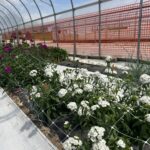
The Purdue cut flower team is currently conducting cut flower demonstrations at three locations in Indiana. In this article, we provide updates and observations on cool-season flowers from the three sites, including open-field and high-tunnel plantings in Vincennes, an open-field site in Indianapolis, and an open-field site in West Lafayette, representing southern, central, and northern…Read more about Spring Planted Cool-Season Cut Flower Update — Dianthus and Centaurea[Read More]
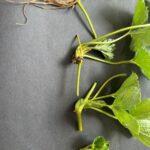
We have seen increasing interest in harvesting strawberry runner tips and producing plug plants on-farm for the next year’s planting. This practice is allowed for cultivars that don’t have a patent or patent has expired. Several excellent Extension publications describe this process, including Strawberry Plug Plant Production published by Utah State University, and Propagating Strawberry…Read more about Considerations of Growing Strawberry Plugs by Harvesting Runner Tips[Read More]
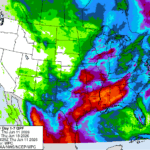
Since last Friday, many parts of Indiana have seen a significant amount of rain (Figure 1). However, the spatial variability illustrates how there can never be enough ground observations and measurements to tell the entire story. In a 24-hour period over the weekend, an observer in Lafayette, Indiana recorded 3.58” and yet 3 miles to…Read more about Are cooler, drier conditions in our future?[Read More]
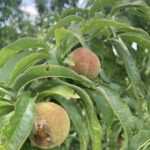
In the past two weeks, our monitoring traps in the orchard have caught 139 dogwood borer (Synanthedon scitula) individuals, 6 coddling moth (Cydia pomonella) individuals, and 1 oriental fruit moth (Grapholita molesta) individuals. Meigs has received over 3” of rain since Saturday, with 1.2” forecasted for the evening of the 9th. An apple cover was…Read more about Crop conditions[Read More]
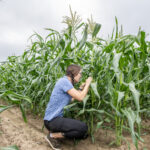
Purdue Extension is currently undergoing a broader transformation process that includes adjustments to priorities and resource allocation. As a result of these changes, I was recently informed that summer salary support for my Extension activities will not be available this year. Given this shift, there will be some temporary changes to the services I can…Read more about Updates to Entomology Extension Services[Read More]
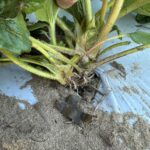
As strawberry harvest winding down, growers are preparing for next year’s planting. A question among plasticulture strawberry growers is whether to establish a new strawberry patch using plug plants or bare-root plants. Plug plants are actively growing transplants produced from runner tips and typically sold in 50-cell trays filled with soilless growing media. In contrast,…Read more about Considerations of Using Plugs or Bare-Root Plants to Start a Plasticulture Strawberry Patch[Read More]
Purdue University prohibits discrimination against any member of the University community on the basis of race, religion, color, sex, age, national origin or ancestry, genetic information, marital status, parental status, sexual orientation, gender identity and expression, disability, or status as a veteran. This material may be available in alternative formats. 1-888-EXT-INFO Disclaimer: Reference to products in this publication is not intended to be an endorsement to the exclusion of others which may have similar uses. Any person using products listed in this publication assumes full responsibility for their use in accordance with current directions of the manufacturer.