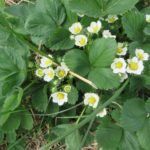
In Lafayette grapes are at bud break to 2-inch shoots. Blackberries are at 3 to 4-inch shoots with flower clusters showing, and raspberries are at 2-3 inch shoots. Strawberries are just starting to bloom. Apples in the northern half of the state are approaching full bloom whereas petal fall is more common in more southern…Read more about Crop Conditions[Read More]

Grape growth is a bit ahead of normal this year. Grapes are at the critical 1 to 3 inch shoot length when Phomopsis cane and leaf spot infections occur. This is a critical time to take control measures for this disease. If left unchecked, the early shoot infections will spread to cluster stems and developing…Read more about Important Sprays for Grape Disease Management[Read More]
Crop management through shoot and cluster thinning is a critical management practice for most varieties. Many varieties grown in Indiana tend to produce a large number of “non-count” shoots from adventitious buds and basal buds at count nodes. This lead to excess crop and shading in the canopy. Shoot thinning reduces excess shoot number to…Read more about Shoot and Cluster Thinning in Grapes[Read More]
Apple growers should have their codling moth pheromone traps in place now. See the April 12 edition of Facts for Fancy Fruit for details of where traps and pheromone lures can be purchased. Traps should be checked for moths several times per week, if not daily. Pheromone lures should be replace about every 3 weeks….Read more about Codling Moth Pheromone Traps[Read More]
Everyone knows that pollinators, including but not limited to honey bees, are important for the production of fruit crops. A big topic in recent years has been the stresses that reduce honey bee populations. Although not most important, pesticides are one factor that can reduce the populations of pollinators. Here are some things fruit growers…Read more about Pollinator Protection[Read More]
We’re getting close to the time when growers need to make chemical thinning decisions – for many the most perplexing and risky decision they will make all year. This is usually a tricky call to make, even more so when we have had spring frosts. Luckily in most places the spring frosts have not been…Read more about Chemical Thinning[Read More]

Fire blight, caused by the bacterium Erwinia amylovora, is a devastating disease of apples and pears. Epidemics of the disease develop quickly, particularly in a climate of warm, wet weather, with hail events—like last night’s 0.75” to 1.5” hail! The type of management program developed by each orchard will vary considerably based upon a variety…Read more about Fire Blight[Read More]
Purdue Wine Grape Team’s 2016 Spring Workshop May 4, 9:00 am. Holtkamp Winery, 10868 Woliung Rd, New Alsace, 47041, Rettig Hill Winery & Vineyard, 2679 E State Road 350 Osgood, IN 47037 Due to limited class size, advance registration and fees are required. Registration fee $50 per person and includes lunch.Make checks payable to Purdue…Read more about Upcoming Meetings[Read More]
Purdue University prohibits discrimination against any member of the University community on the basis of race, religion, color, sex, age, national origin or ancestry, genetic information, marital status, parental status, sexual orientation, gender identity and expression, disability, or status as a veteran. This material may be available in alternative formats. 1-888-EXT-INFO Disclaimer: Reference to products in this publication is not intended to be an endorsement to the exclusion of others which may have similar uses. Any person using products listed in this publication assumes full responsibility for their use in accordance with current directions of the manufacturer.