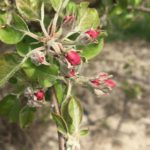
Apples in Lafayette are approaching pink. IN more southern areas of the state apples are past full bloom and into petal fall. Frost damage to crops has been widespread in southern areas of the state. Fruit crops are in early stages of growth across the state. In southern areas peaches and apples are in bloom…Read more about Crop Conditions[Read More]
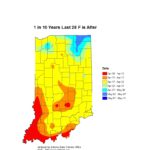
The Climate Prediction Center’s outlook for May is dominated by uncertainty regarding both temperature and precipitation (Figure 1). The computer models could not settle on a consistent pattern for either above- or below-normal temperatures for the month and precipitation outlooks are only slightly confident that there will be above-normal precipitation in southern Indiana. Shorter-term outlooks…Read more about Uncertain Climate Outlook for May[Read More]
Grapes are in the early stages of growth across the state, from bud break to 4 to 6 inch shoots. Significant frost and freeze damage occurred in central and southern areas so that will set growth back a couple of weeks as the secondary buds break. With a reduced number of primary shoots, protection of…Read more about Early season management of grape diseases and insect pests[Read More]
This winter-spring has been my first excursion into growing strawberries in a high tunnel. It didn’t take much for our own Wenjing Guan to convince me to plant some; who doesn’t love to eat fresh strawberries? We planted them back in October and I just peeked at them every couple of weeks throughout the winter,…Read more about Strawberry Observations from an Entomologist[Read More]
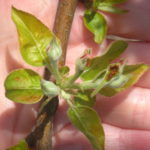
In the Midwest, extreme weather events are, unfortunately, regular occurrences, even in extremely unusual times. At this point, though, it just feels like a pile-on. Most fruit crops planted in Indiana are tolerant of the cold when they are fully dormant. In the spring, as trees break bud and begin to flower, they lose cold…Read more about After the Freeze 2020[Read More]
Late spring freezes and severe winter cold regularly causes stone fruit crop losses to approach100%. With this level of irregular cropping, disease management must focus on protecting foliage to ensure a good potential crop for next year, while reducing over wintering spore loads. Copper is fairly phytotoxic to peaches and should be avoided. Bravo is…Read more about Managing Diseases on Stone Fruits[Read More]
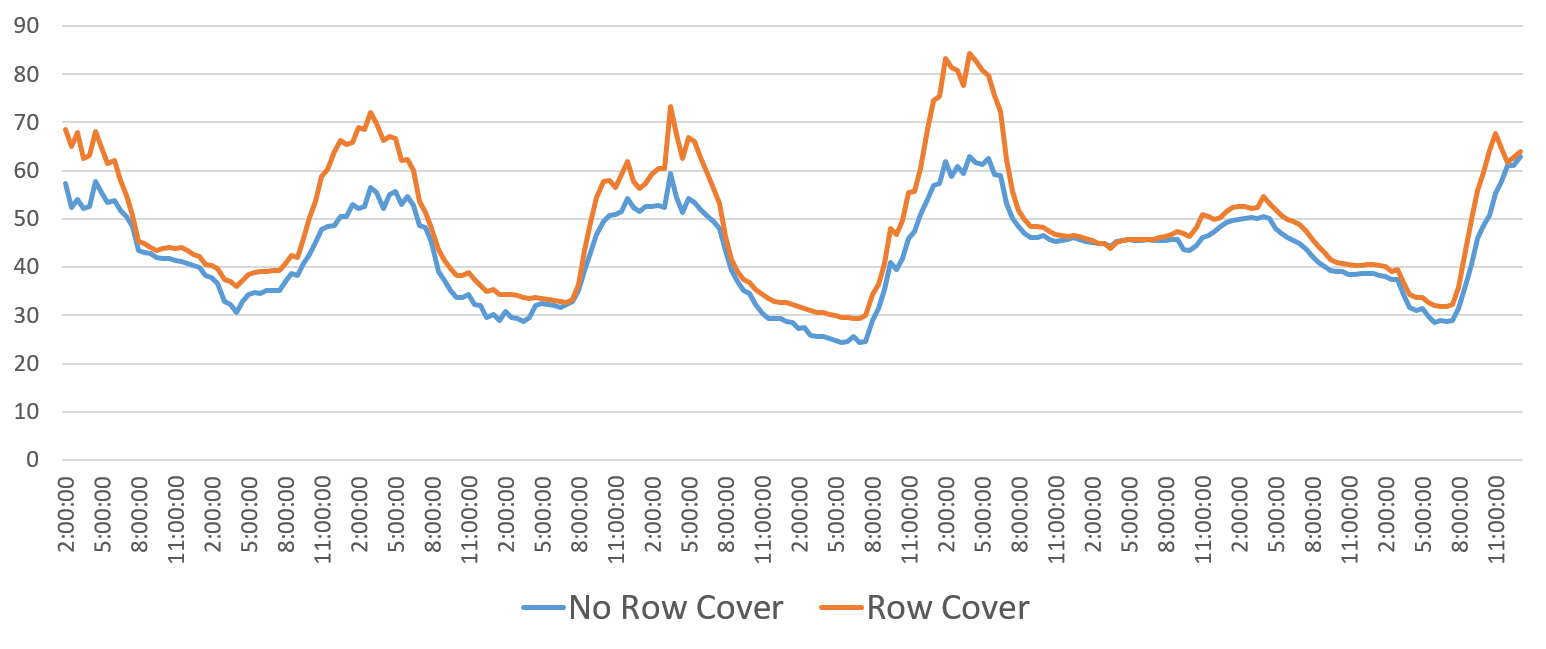
Spring weather is unpredictable. One of the major risks associated with strawberry production is cold damage in the spring. Open strawberry flowers can not tolerate temperatures lower than 30°F, popcorn stage flowers and tight buds may tolerant temperatures low to 26 and 22°F, respectively. If strawberries are in the early blooming stage, the damage might…Read more about Strawberry Cold Protection Made a Difference[Read More]
At Southwest Purdue Agriculture Center in Vincennes, IN. We are conducting trials to evaluate annual plasticulture strawberry production systems. Here are the updates of strawberries from different production systems. In a high tunnel, harvest of fall-planted strawberries started in early April. Cultivars Sensation, Radiance, Ruby June were early cultivars; followed by Beauty, Fronteras. So far,…Read more about Annual Plasticulture Strawberry Update at Southwest Purdue Agriculture Center[Read More]
Guidelines to exercise essential status for a farmers market

In Lafayette and more northern areas of the state, it’s been a pretty typical spring. Temperatures at this time of the year are a two-edged sword. Cooler temperatures and the delay in crop development, reduces the chance f freeze damage to crops, but if flowers are already open, we want warm temperatures for bee movement,…Read more about Spring temperatures[Read More]

Purdue University prohibits discrimination against any member of the University community on the basis of race, religion, color, sex, age, national origin or ancestry, genetic information, marital status, parental status, sexual orientation, gender identity and expression, disability, or status as a veteran. This material may be available in alternative formats. 1-888-EXT-INFO Disclaimer: Reference to products in this publication is not intended to be an endorsement to the exclusion of others which may have similar uses. Any person using products listed in this publication assumes full responsibility for their use in accordance with current directions of the manufacturer.