Strawberries growing in the matted-row system are in the blooming stage. Open flowers cannot tolerate temperatures lower than 30°F. Strawberry growers should be prepared for the coming low temperatures this week. Row covers can be effective in protecting strawberry flowers. In our earlier trial, 1.5 oz/sq row covers provided 4-6 degrees protection and successfully protected…Read more about Using Row Cover or Sprinkler Irrigation for Cold Protection of Strawberries[Read More]
Found 92 Articles
There has been some talk about the use of promalin to help overcome the damaging effects of freezing temperatures. Only a small amount of research has been conducted on this. Dr. Steve McArtney showed that Promalin applied after damaging freeze events could increase parthenocarpic (seedless) fruit development, but not every time. Keep in mind this…Read more about Frost recovery treatments[Read More]
What is the best way to assess bud damage from cold temperatures? Drs. Tara Baugher and Jim Schupp at Penn. State University have put together a nice page with some excellent photos explaining how to assess fruit bud survival: I would add that unless you find that more than 90% of your buds have been…Read more about Assessing Fruit Bud Survival and Crop Potential[Read More]
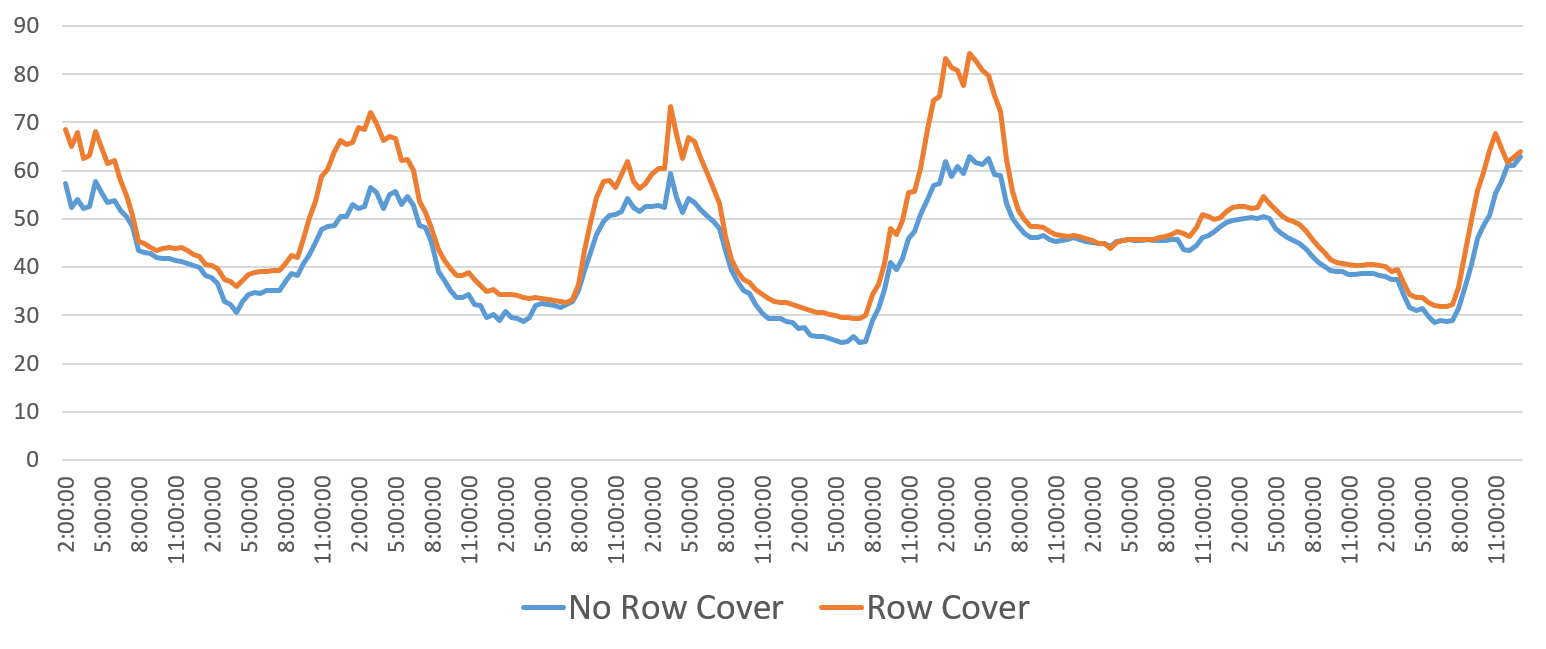
Spring weather is unpredictable. One of the major risks associated with strawberry production is cold damage in the spring. Open strawberry flowers can not tolerate temperatures lower than 30°F, popcorn stage flowers and tight buds may tolerant temperatures low to 26 and 22°F, respectively. If strawberries are in the early blooming stage, the damage might…Read more about Strawberry Cold Protection Made a Difference[Read More]
Over the last week many areas of the state have experienced minimum temperatures likely to cause bud damage. Many areas experienced low temperatures of 24-26 F (according to weather stations) although one grower reported a low of 22 F. As experienced growers know well, it’s not just the temperature as such that’s important, but the…Read more about Freeze damage[Read More]

In Lafayette and more northern areas of the state, it’s been a pretty typical spring. Temperatures at this time of the year are a two-edged sword. Cooler temperatures and the delay in crop development, reduces the chance f freeze damage to crops, but if flowers are already open, we want warm temperatures for bee movement,…Read more about Spring temperatures[Read More]
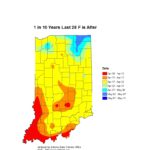
The Climate Prediction Center’s outlook for May is dominated by uncertainty regarding both temperature and precipitation (Figure 1). The computer models could not settle on a consistent pattern for either above- or below-normal temperatures for the month and precipitation outlooks are only slightly confident that there will be above-normal precipitation in southern Indiana. Shorter-term outlooks…Read more about Uncertain Climate Outlook for May[Read More]
Guidelines to exercise essential status for a farmers market
Late spring freezes and severe winter cold regularly causes stone fruit crop losses to approach100%. With this level of irregular cropping, disease management must focus on protecting foliage to ensure a good potential crop for next year, while reducing over wintering spore loads. Copper is fairly phytotoxic to peaches and should be avoided. Bravo is…Read more about Managing Diseases on Stone Fruits[Read More]
At Southwest Purdue Agriculture Center in Vincennes, IN. We are conducting trials to evaluate annual plasticulture strawberry production systems. Here are the updates of strawberries from different production systems. In a high tunnel, harvest of fall-planted strawberries started in early April. Cultivars Sensation, Radiance, Ruby June were early cultivars; followed by Beauty, Fronteras. So far,…Read more about Annual Plasticulture Strawberry Update at Southwest Purdue Agriculture Center[Read More]
Purdue University prohibits discrimination against any member of the University community on the basis of race, religion, color, sex, age, national origin or ancestry, genetic information, marital status, parental status, sexual orientation, gender identity and expression, disability, or status as a veteran. This material may be available in alternative formats. 1-888-EXT-INFO Disclaimer: Reference to products in this publication is not intended to be an endorsement to the exclusion of others which may have similar uses. Any person using products listed in this publication assumes full responsibility for their use in accordance with current directions of the manufacturer.