Due to the COVID crisis, most Purdue Extension meetings will be held virtually. Most Purdue Extension staff are working from home and are available to answer your questions by email, phone or through social media. Our contact information is at the end of the newsletter. September 10-12, 2020 Purdue Extension Master Gardener State Conference Sponsored…Read more about Extension Events[Read More]
Found 92 Articles
The USDA Coronavirus Assistance Program (CFAP) is accepting applications up until tomorrow (Sept. 11). These should be made by contacting a USDA-FSA office. Producers of specialty crops are eligible for CFAP payments for losses for the following three categories: Had crops that suffered a five percent-or-greater reduction in sales price between mid-January and mid-April as…Read more about Coronavirus Food Assistance Program for Specialty Crops[Read More]
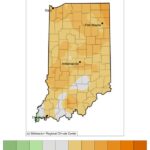
For those keeping track of my articles over the last few weeks, the outlooks of wetter and cooler than normal conditions have been the theme. The cooler temperatures never really came to fruition. In fact, most of Indiana was 1°F to 3°F above normal over the past two weeks (Figure 1)! Regarding the wetter-than-normal precipitation…Read more about Climate Update[Read More]
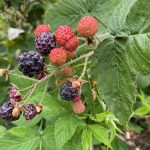
Grape harvest continues. Recent rainy weather is making late season fruit rots more problematic on susceptible varieties. Apples are sizing up nicely and mid-season varieties are beginning to ripen. Primocane black and red raspberries are beginning to ripen. Black Magic primocane blackberry harvest is winding down and APF45 harvest is just starting. Pawpaw fruit are…Read more about Crop Conditions[Read More]
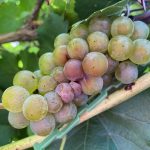
Late season fruit rots: Sour rot complex, Botrytis and Ripe rot are major concerns in the Midwest. Though it’s been pretty dry across much of the state recently, some untimely rains can lead to disaster. Once berries split due to rain, yeasts and bacteria quickly invade damaged fruit, leading to rots that attract fruit flies….Read more about Late season disease management in grapes[Read More]
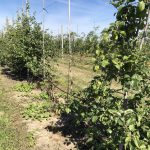
Modern clonal rootstocks are the foundation-and literal roots– to modern apple growing. These rootstocks ensure growers have orchards of relatively small trees that can be densely planted and result in earlier and greater bearing than what was historically possible. This is an obvious improvement over waiting multiple decades for an orchard to become profitable. However,…Read more about Rootstock problems are neither new nor unique…” Cummings and Norton, 1974[Read More]
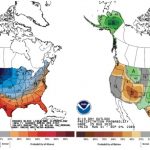
After the last several weeks of predominantly dry conditions, the national climate outlooks are finally showing confidence that temperatures should start shifting to cooler than normal and precipitation will be wetter than normal (see figure). Hurricane Laura will definitely help the precipitation side of that prediction with current tracks having the strongest rainfall amounts in…Read more about Cooler, wetter conditions expected over next several weeks[Read More]
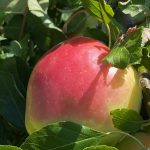
Grapes are being harvested across the state. Yields are pretty low for the early varieties that were hurt worst by the spring freezes. In Lafayette all our varieties are at veraison and harvest is nearing. Apples are sizing nicely where there is fruit. Some of Jules Janick’s selections have full crops, but many varieties have…Read more about Crop Conditions[Read More]
This video guides you for a tour of strawberry production in high tunnels in Indiana. Additional videos addressing specific production practices will be available in the future. Please stay tuned for the update of plasticulture strawberry research from Purdue.
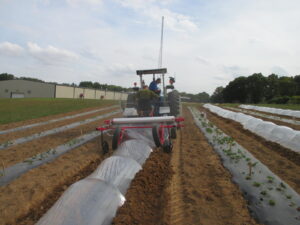
Strawberries are primarily grown in matted row system in Indiana, in which bare-root strawberry plants are set in the spring. Runners are established. Fruit is first harvested in the second year and plantings are renovated each year for 2-3 seasons. Growers in the southern part of the state expressed interest in growing strawberries in plasticulture…Read more about Using low tunnel is promising to increase yield of annual plasticulture strawberry production[Read More]
Purdue University prohibits discrimination against any member of the University community on the basis of race, religion, color, sex, age, national origin or ancestry, genetic information, marital status, parental status, sexual orientation, gender identity and expression, disability, or status as a veteran. This material may be available in alternative formats. 1-888-EXT-INFO Disclaimer: Reference to products in this publication is not intended to be an endorsement to the exclusion of others which may have similar uses. Any person using products listed in this publication assumes full responsibility for their use in accordance with current directions of the manufacturer.