We are delighted to be hosted for our Summer Tour by Garwood Orchards – one of the larger and best run operations in the state. This applies to their fruit, vegetable and farm marketing activities. Whether you are a fruit grower, a vegetable grower or a farm marketer, you are bound to be inspired and…Read more about Summer Field Tour[Read More]
Peaches
June 26, 2018 Indiana Hort Society Summer Field Day Garwood Orchard, LaPorte, IN Contact Lori Jolly-Brown ljollybr@ purdue.edu October 17, 2018 Indiana Flower Growers Conference Daniel Turf Center Contact Lori Jolly-Brown ljollybr@ purdue.edu January 8, 2019 Illiana Vegetable Growers Symposium. Teibel’s Family Restaurant, Schererville, IN Contact Liz Maynard emaynard@purdue.edu https://ag.purdue.edu/hla/Extension/Pages/IVGS.aspx February 12-14, 2019 Indiana Hort…Read more about Upcoming Events[Read More]
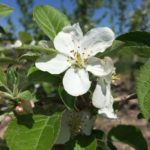
What a difference a couple of weeks of warm weather makes. Crop development is progressing rapidly with warmer weather. Apples in the south are around 10 mm, and in full bloom here in Lafayette. Peaches in southern areas of the state are still in the shuck, but barely. Folks in southern areas are getting ready…Read more about Crop Conditions[Read More]
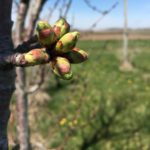
Fruit crops are finally starting to grow in the Lafayette area after a few days of warmer weather. Apples are at 1/2 inch green to tight cluster. Peaches have 1/2 inch vegetative shoots. There are no live flower buds in our planting. Cherries are at swollen bud. Early grapes varieties are at swell. Raspberries have…Read more about Crop Conditions[Read More]

“Spring” might be too strong a word to describe conditions this year. As we see from Figure 1, we’re now officially the latest spring so far this decade, and about the same as the long-term average. Having said that, a good part of our Growing Degree Day accumulation has come from one warm day on…Read more about Spring 2018[Read More]
The severe cold weather we experienced in early January had a dramatic effect on the number of surviving fruit buds on crops such as peaches. The impact was highly variable depending on a number of factors, primarily location within the state. If you have less than a full crop of any of your fruit crops,…Read more about Insect Management When You Have a Partial or No Crop[Read More]
A new Monsanto-backed company is on the verge of producing the first fruit made with a blockbuster gene-editing tool that could revolutionize agriculture In a move aimed at securing its future, Monsanto has invested $125 million in a gene-editing startup called Pairwise. The alliance could tee up Monsanto, long known for its controversial dealings with…Read more about The First Fruit Made with a Blockbuster Gene-editing Tool[Read More]

So far it has been a cool spring, that in the northern half of the state has helped hold back bud development. As we can see from Figure 1, in Lafayette we have only accumulated 25 growing Degree Days (GDD), and most of these were the result of two warm days (54 and 63 F)…Read more about Spring Temperatures[Read More]
It has been a cool spring so far and most fruit crops are still relatively dormant in the Lafayette area. Early grapes are just at bud swell, red raspberries are also showing signs of growth, sweet cherry buds are swelling, and early apples are at silver tip. Fruit trees in Lafayette remain dormant, however are…Read more about Crop Conditions[Read More]