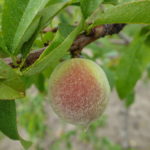
Grapes are at the 8-10 inch shoot stage in southern Indiana and 6 inches or less in northern Indiana. Brambles are blooming in the south and approaching first bloom in central and northern areas. Blueberries are at petal fall to full bloom across the state. There are a few reports of damage to grapes and…Read more about Crop Conditions[Read More]
Strawberry
WASHINGTON, Mar. 15, 2017 –America’s farmers and ranchers will soon have the opportunity to strongly represent agriculture in their communities and industry by taking part in the 2017 Census of Agriculture. Conducted every five years by the U.S. Department of Agriculture’s (USDA) National Agricultural Statistics Service (NASS), the census, to be mailed at the end…Read more about Census of Agriculture Countdown Begins for America’s Farmers and Ranchers[Read More]
Eastern Indiana Fruit Growers Association Hosting Orchard Garden tours at the “Slice of Paradise” 3912 S. Felton St., Marion, IN. Tuesday, May 23 at 6:30pm Dr. Rick Foster from Purdue University will be in attendance For more information, call 765-661-4597 Indiana Horticultural Society Field Day June 28, 2017 Tuttle Orchard Greenfield, IN More details to come but…Read more about Upcoming Events[Read More]
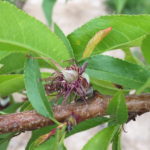
Grapes have grown quickly this past week and most varieties are now past bud burst. The earliest have 4 to 6 inch shoots at this time. Blackberries and raspberries are also growing rapidly, with new primocanes emerging from the ground and laterals on floricanes out to 4 inches or longer. Flower buds are visible on…Read more about Crop Conditions[Read More]
Indiana Horticultural Society Field Day June 28, 2017 Tuttle Orchard Greenfield, IN More details to come but mark the date on your calendar and plan to attend Indiana Horticultural Congress February 13-15, 2018 Indianapolis Marriott East Indianapolis, IN For further information contact Lori Jolly-Brown @ljollybr@purdue.edu or visit www.inhortcongress.org for more details.
Eastern flower thrips are an occasional pest of strawberries. They are attracted to and feed on flowers, with the result being leathery fruit or fruit that fail to ripen. This problem occurs every year at low levels but has not been serious in recent years, with the last serious problem in 1994. Eastern flower thrips…Read more about Eastern Flower Thrips in Strawberries[Read More]
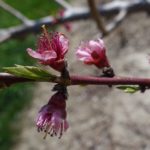

As the spray season approaches, it is good to remember the profound impact water quality has on the performance of pesticides used by fruit growers. Purdue Pesticides Program recently published a guide, The Impact of Water Quality on Pesticide Performance PPP-86, available at the Education Store, 1-888-EXT-INFO or www.extension.purdue.edu/store/. I highly recommend this guide to…Read more about Effects of Water Quality of Pesticides[Read More]
The results of a historical primate behavior analysis suggest that species with fruit-filled diets evolved larger brains. A popular theory among evolutionary biologists is that we have our sociability to thank for our big brains. This “social brain hypothesis” suggests that the mental effort involved in interacting with others eventually increased our cognitive capacity. However,…Read more about New study: Diet contributes to brain size[Read More]
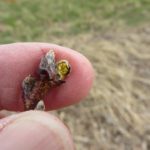
Following a very early warm-up, temperatures cooled off the middle of March slowing crop development and bringing us back closer to normal. In southern areas, peaches are in full bloom, but only just showing a little pink in more northern areas. Apples are still in tight cluster and probably at least 10 days from full…Read more about Crop Conditions[Read More]