Fruit rots continue to pose a problem for those of us in the wetter parts of the state. Frequent rains and warm temperatures really set the stage for bitter rot, black rot, white rot, and even brown rot. Any rain event that produced more than 2” of rain would remove the majority of fungicide, meaning…Read more about Fruit Rots[Read More]
Disease Management
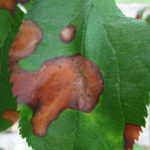
In 1907, Thomas Burrill wrote that regarding bitter rot, “There was nothing to do but to helplessly submit to the inevitable.” However, he continued and stated “that what formerly seemed incomprehensible is easily understandable.” Some key points he touches on regarding the management of bitter rot are weather conditions and sanitation. Obviously, there is little…Read more about Bitter Rot[Read More]
ReTain (AVG) is a plant growth regulator that blocks the production of ethylene. When ReTain is applied to apple, several ripening processes are slowed, including preharvest drop, fruit flesh softening, starch disappearance, and red color formation. In order for ReTain to be effective it must be applied well in advance of the climacteric rise in…Read more about Timing Retain Sprays[Read More]
Preharvest drop refers to the process where fruit fall from the tree prior to harvest. Not all apple varieties are affected, but with some, such as McIntosh and Pristine, pre-harvest drop can be extreme. Several growth regulator materials are available to growers to help reduce pre-harvest drop. These materials are often referred to as “stop-drop”…Read more about Control Of Preharvest Drop with NAA[Read More]
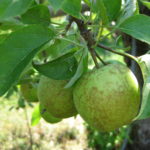
Since 2012, apple powdery mildew(PM) has been part of new normal of apple growing in Indiana. As many of you remember (but would like to forget), 2012 was the year when much of the state lost the crop due to a late season freeze. This was then followed by one of the driest years on…Read more about Powdery Mildew[Read More]
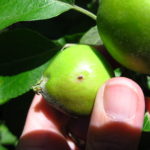
It may seem like the worst is over, but apple growers should continue to be vigilant and apply fungicides even as we approach the end of the ascospore discharge period. Leaves are still highly susceptible to both primary and secondary apple scab infection until the terminal bud has set and the leaves have hardened off….Read more about Attention Apple Growers[Read More]

Grapes in the southern half of the state will soon be reaching the critical pre-bloom stage, which is a key time to control important diseases such as black rot, downy mildew, and powdery mildew. The three or four sprays made from immediate pre-bloom to 4 weeks post bloom are critical for controlling fruit infections. Growers…Read more about Important Pre-bloom Sprays for Grapes[Read More]

Diagnosing Phytophthora crown rot is difficult. First examine the crown and rule out any type of mechanical damage, including rodent damage. Early symptoms of root and crown rot include delayed bud break, small leaves (often with leaf discoloration), and twig dieback. Bark discoloration, unthrifty growth, and premature leaf drop may occur later in the season…Read more about Phytophthora Symptoms[Read More]

Wet weather continues to be a problem, not just for foliar disease, but root and crown rot, as well. Phytophthora root and crown rot is observed in wet spots: low-lying areas of orchards with heavy, poorly-drained soils. These pathogens can infect all fruit producing plants. Occurrence of this disease is sporadic and tied to wet…Read more about Phytophthora of Tree Fruit[Read More]
Although not always possible, avoid planting in low-lying, flood prone areas. Control weeds around the trunk of apple trees, as many serve as alternate hosts for the crown rot fungus(especially nightshades). Reduce nitrogen application on young trees, and trees with excessive growth as they are more susceptible to crown rot. As there are different species…Read more about Disease Management[Read More]