Shoot Thinning The optimum shoot density is 5-6 shoots per foot of row. Thinning to this density can help reduce shading, adjust the crop, lower the risk of disease and improve spray penetration. The optimal time for shoot thinning is before the shoots reach 12 inches. Much of the state is past this point, so…Read more about Grapevine Canopy Management[Read More]
Found 896 Articles
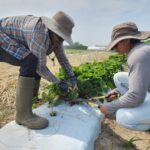
As strawberry harvest winds down, attention turns to strawberry renovation. Renovation consists of mowing existing strawberry foliage (Figure 1) and, in matted row systems, cultivating to reduce row width. When combined with strategic herbicide applications, this can be a great time in the production cycle to catch up on weed management or maintain your level…Read more about Weed Management at Strawberry Renovation[Read More]
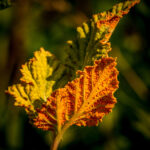
When Neil Young was singing about “Rust Never Sleeps,” I doubt he meant orange rust, caused by the fungus Gymnoconia nitens (formerly Arthuriomyces peckianus). But who knows? Maybe he did? And he’d be right: This rust is definitely not sleeping! Despite unusually dry conditions throughout much of the state, orange rust is still making its presence known…Read more about Orange Rust[Read More]
The harvest season may not have ended yet; it is time to plan for the new planting. This article summarizes options for planting materials and considerations for plasticulture-grown strawberries in the region. Purchasing plug plants Plug plants are like vegetable transplants with actively growing root systems. Plug plants are much easier to establish than bare-root…Read more about Plug? Bare-root? What Other Options for Plasticulture Strawberry Planting? [Read More]
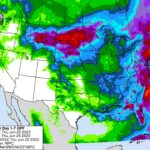
Below-normal temperatures continued through the first 21 days of June as the state average temperature was 68.3°F, which was 1.8°F below the 1991-2020 climatological normal. Temperature departures were 1-5°F below normal across the state, with larger departures in eastern and southern Indiana (Figure 1, Left). Maximum temperatures were near normal for the entire state, and…Read more about Drought Expands and Expected to Continue[Read More]

REGISTER HERE 2023 FIELD DAY SCHEDULE Thursday, July 27, 2023 Registration 8:00 – 9:00 am EST Demonstrations at 9:00 am – 12:00 pm EST Coordinator: Petrus Langenhoven Extension Staff: Lori Jolly-Brown, Lais McCartney, and Patrick Williams Please join us for the 2023 Small Farm Education Field Day! The EMT food truck will be on site…Read more about Purdue Small Farm Education field day 2023[Read More]

REGISTER HERE Purdue Fruit & Vegetable Field Day 2023 Thursday, July 20, 2023 Purdue Meigs Ag Center 9101 S. 100 E, Lafayette, IN 47909 Coordinator: Petrus Langenhoven Extension Staff: Lori Jolly-Brown, Jay Young, Chloe Richard, and Paul Howard FIELD DEMONSTRATIONS Sweet Corn Pest Management Updates Silage Tarps for Weed Management in Potatoess …Read more about Purdue Fruit & Vegetable Field Day 2023[Read More]
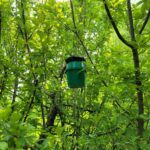
I hope the growing season is going well for all fruit producers! For this issue, I am sharing a quick update on what we’re seeing in pheromone-baited monitoring traps placed in orchards at the Purdue Agricultural Center in Lafayette, Indiana (Tippecanoe County), as well as orchards of collaborating Indiana growers (thank you!) in Tippecanoe and…Read more about Updates on Codling moth, Oriental fruit moth, and Spotted-wing Drosophila captures in pheromone-baited monitoring traps[Read More]
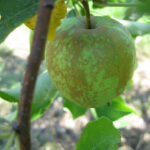
Currently, the US Drought Monitor (https://droughtmonitor.unl.edu/CurrentMap/StateDroughtMonitor.aspx?IN) places Indiana in the ‘abnormally dry’ category. With no rain in our 10 day forecast, I expect that to only get worse, and with it, powdery mildew on all fruit crops. Powdery mildew is identified by the white, powdery growth on leaves and shoots that consist of the fungal…Read more about Apple powdery mildew[Read More]
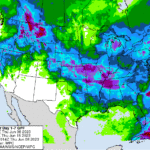
The last several weeks have seen very little precipitation across Indiana. Figure 1 illustrates how much was received compared to the climatological normal amount from May 9 through June 7. The entire state received amounts less than normal (where normal would be 100 percent on the map) with central and northeastern Indiana having received less…Read more about How serious is this drought and will it continue?[Read More]
Purdue University prohibits discrimination against any member of the University community on the basis of race, religion, color, sex, age, national origin or ancestry, genetic information, marital status, parental status, sexual orientation, gender identity and expression, disability, or status as a veteran. This material may be available in alternative formats. 1-888-EXT-INFO Disclaimer: Reference to products in this publication is not intended to be an endorsement to the exclusion of others which may have similar uses. Any person using products listed in this publication assumes full responsibility for their use in accordance with current directions of the manufacturer.