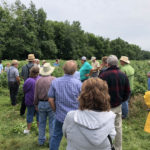
Thanks to all members of the Garwood family and staff who hosted us for the summer field day last week. Growers were inspired by the excellent job Garwoods do with fruit and vegetable production and marketing. The fruit, vegetable and farm marketing industries in the state were well represented, and all in attendance appreciated members…Read more about Successful Summer Field Day at Garwoods[Read More]
Pome Fruits
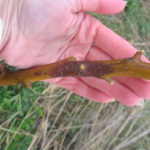
Diseases that affect the twigs, branches, and the main trunk of a tree are referred to as cankers or blights. Canker diseases can be a serious problem in the orchard, vineyard, berry or bramble patch when they are not properly managed, and even when they are. All woody plants can be infected by canker pathogens….Read more about Opportunistic Canker Pathogens[Read More]
Following the success of last year’s Summer Field Tour at Tuttle Orchards, this year we are again planning a combined summer field tour with the Indiana Horticultural Society, the Indiana Vegetable Growers’ Association and the Indiana Farm Market Association. We will be hosted by Garwood Orchards in La Porte, IN. While we encourage membership…Read more about Summer Field Tour to be held at Garwood’s Orchard La Porte, IN[Read More]
June 26, 2018 Summer Field Tour- Fruits & Vegetables Garwood Orchard, LaPorte, IN Contact Lori Jolly-Brown ljollybr@ purdue.edu July 17-18, 2018 Indiana Winery and Vineyard Association Summer Meeting Brown County Inn, Nashville, IN Contact https://indianawinevine.org/events to register August 30, 2018 Small Farm Education Field Day Purdue Daniel Turf Center Contact Lori Jolly-Brown, ljollybr@purdue.edu or 765-494-1296 Register here:…Read more about Upcoming Events[Read More]
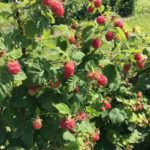
The warm weather is pushing crop develop rapidly. Grapes are at bunch closure, summer red and black raspberry harvest has begun. Some primocane fruiting types are beginning to flower. Gooseberry and currant harvest has begun. Apples are 1-2 inches in diameter. Strawberry harvest is over and renovation has begun. The chemical thinning window has closed…Read more about Crop Conditions[Read More]
From one of the coldest Aprils to one of the hottest Mays, what will June bring us? So far, apple scab has been less of a problem than usual, but powdery mildew seems to flying under the radar for many orchards. Keep your eyes out for the characteristic leaf curl (Fig.1). Varieties like Jonathan, JonaGold,…Read more about Apples[Read More]

Following the success of last year’s Summer Field Tour at Tuttle Orchards, this year we are again planning a combined summer field tour with the Indiana Horticultural Society, the Indiana Vegetable Growers’ Association and the Indiana Farm Market Association. We will be hosted by Garwood Orchards in La Porte, IN. While we encourage membership in…Read more about Summer Field Tour – fruits and vegetables[Read More]
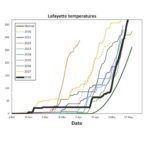
This is the last installment of our series on spring temperatures for 2018. What a strange year it has been. We started out very cool until mid-April and it didn’t really warm up until early May (Fig. 1). I think every day since then has been over 80F. Although the early spring was much cooler…Read more about Spring Temperatures[Read More]