Anthracnose, caused by Elsinoe veneta, is a common fungal disease of brambles. It is mainly a problem on black raspberries and some blackberries. It is much less common on red raspberries. Most modern thornless blackberries (Apache, Triple Crown, Osage, Ouachita, etc) are resistant to anthracnose. However, if you grow a susceptible variety, is is important…Read more about Raspberry Anthracnose[Read More]
Disease Management

“During the past few years considerable complaint has been made in this state of the loss of apples through rotting.” George P. Clinton, 1902. It’s been quite a season for rot. High temperatures, coupled with regular rains created a perfect storm of summer rots. If you were one of the orchards with problems, you need…Read more about End of season thoughts on rots[Read More]
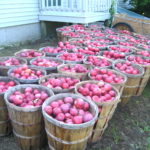
Hopefully, everyone somehow managed to obtain effective fungicide coverage during the wet summer of 2016, and the torrential rains of the last few days. Unfortunately, many of the diseases you thought you successfully battled all summer long might still show up now at harvest, and even in a few weeks post-harvest. It is important to…Read more about The Final Spray[Read More]
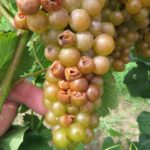
Grape harvest is underway in the southern part of the state, and early varieties have been harvested in central Indiana. The recent storms and heavy rains could not have come at a worse time, especially for varieties near harvest, and tight clustered varieties such as Vignoles, Seyval Valvin muscat, etc. Excess rain causes fruit…Read more about Grapes: The Sour Rot Situation[Read More]

The symptoms of flyspeck and sooty blotch have begun to make their appearance. I know this because 1). I’m starting to see spots, and 2). We have accumulated MORE THAN enough hours of post- petal fall leaf wetness needed for infection to occur. First, what is enough hours of post- petal fall leaf wetness needed…Read more about Symptoms of flyspeck and sooty blotch[Read More]

At midseason, scout fruit (20-30 apples or pear) in the interior canopy of sample trees. Signs of this disease are more obvious on light colored fruit, like Golden Delicious, Pristine, or Yellow Transparent. The disease is worse in poorly pruned trees in the wetter, foggy, slow-drying areas of the orchard. This year, in some parts…Read more about Sooty Blotch and Flyspeck[Read More]

Warm, wet, summer weather, coupled with any lapses in orchard sanitation, can result in summer disease outbreaks. At Meigs, we are seeing the foliar stage of Botryosphaeria, aka frog eye leaf spot (Fig. 1). On the plus side, we won’t be surprised when we see black rot on the apples at harvest (Fig. 2). Fortunately,…Read more about Summer Diseases[Read More]
ReTain (AVG) is a plant growth regulator that blocks the production of ethylene. When ReTain is applied to apple, several ripening processes are slowed, including preharvest drop, fruit flesh softening, starch disappearance, and red color formation. In order for ReTain to be effective it must be applied well in advance of the climacteric rise in…Read more about Timing Retain Sprays[Read More]
Preharvest drop refers to the process where fruit fall from the tree prior to harvest. Not all apple varieties are affected, but with some, such as McIntosh and Pristine, pre-harvest drop can be extreme. Several growth regulator materials are available to growers to help reduce pre-harvest drop. These materials are often referred to as “stop-drop”…Read more about Control Of Preharvest Drop with NAA[Read More]
Finally we have some warm, sunny weather, and that means fruit are growing quickly. Generally, fruit are 10–20 mm depending on where in the state you’re located. Many of our common post bloom thinners such as NAA, Sevin and Maxcell work very well when fruit are around 12mm and temperatures are in the 70s. Once…Read more about Apple Chemical thinning[Read More]