Here’s an excellent story from The Progressive Farmer on dicamba drift. https://www.dtnpf.com/agriculture/web/ag/news/crops/article/2018/07/20/dicamba-moves-beyond-bean-fields-eye
Bruce Bordelon

Professor Emeritus
Department of Horticulture and Landscape Architecture
Department of Horticulture and Landscape Architecture
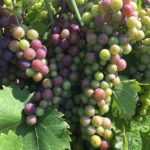
Early grapes are just beginning to soften and color (veraison). Summer raspberry harvest if winding down and fall bearing types are flowering. Blueberry harvest continues. Japanese beetle numbers continue to be relatively high in the Lafayette area. Peach harvest (for those fortunate to have a crop) has begun. Early apple cultivars are approaching harvest.
An Indiana Pesticide Clean Sweep Project designed to collect and dispose of suspended, canceled, banned, unusable, opened, unopened or just unwanted pesticides (weed killers, insecticides, rodenticides, fungicides, miticides, etc.) is being sponsored by the Office of Indiana State Chemist (OISC). This disposal service is free of charge up to 250 pounds per participant. Over 250…Read more about Indiana Pesticide Clean Sweep Project[Read More]
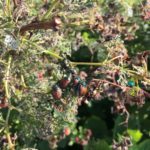
Japanese beetles appear to be especially abundant this year. They started showing up a couple of weeks ago and are now numerous in many areas. This past year Japanese beetle populations were higher than they have been for a number of years and this year looks to be a repeat. We’ve seen severe damage to…Read more about Japanese Beetles[Read More]
Plant nutritional status is important for all phases of plant growth and has a direct effect on vigor, fruitfulness, cold hardiness, and other factors. Tissue analysis is the most reliable means of determining plant nutritional status. Combined with soil testing, tissue analysis can help pinpoint the source of problems and determine what measures may be…Read more about Tissue Analysis for Small Fruit and Grapes[Read More]
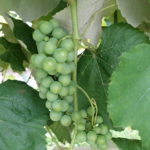
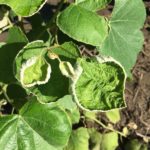
By now almost everyone has heard about dicamba, the volatile growth regulator herbicide that has garnered so much attention the past couple of years. It is being used over the top of dicamba-tolerant soybeans on thousands of acres in the state this year. We are trying to keep track of off-target damage so we would…Read more about Watch for Dicamba Drift in Fruit Crops[Read More]
This was a very short year for strawberries due to the record warmth in May. By now, most harvest is over. As soon as harvest is done, it’s time to begin the renovation process. Matted row strawberry plantings must be renovated each year to establish new crowns for the following year’s crop. For best results,…Read more about Strawberry Renovation[Read More]
Now that we are past fruit set, it is easy to tell what level of crop we are carrying. With the fairly extensive winter injury this year, many varieties will have a light crop borne on secondary or tertiary shoots. Little if any crop control will be needed in those. However, many of the plantings…Read more about Crop Management in Grapes[Read More]
Grapes across the state are post bloom a week or more. As berries reach 3 to 5 weeks post bloom they become naturally resistant to infection by black rot and powdery mildew fungi. So our spray program can relax a bit. Growers normally extend to a 14 to 21 day schedule supported by regular scouting….Read more about Grape Pest Management[Read More]