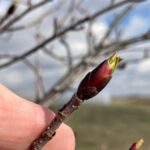
Warm temperatures over the last week or so have accelerated growth rapidly. In Lafayette, apples are nearing green tip, and strawberries at full bloom. Blackberries are pushing half-inch green. Further south in the state, temperatures are in the mid 70’s, apricots are in full bloom and peaches not quite at pink (thanks to Applacres for…Read more about Crop Conditions[Read More]
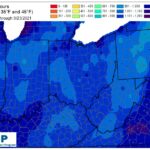
The old adage says that March comes in like a lion and out like a lamb. The first few days of March started off quite normal and then quickly transitioned to lamb-like (not an official meteorological term) conditions. Then the roller coaster ride began with above-normal temperatures, followed by cooler, stormier conditions, followed by milder…Read more about Climate and Weather Lions, Lambs, and La Niñas[Read More]
Did you know that almost half of the food we consume every day comes from crops the USDA categorizes as “minor” or “specialty” crops? Compared to the acreage of corn and soybean in the Midwest, fruit and vegetable crops are only a small percentage of crops grown. Not surprisingly, agrochemical companies focus their effort on…Read more about The IR-4 Project and Indiana Growers[Read More]
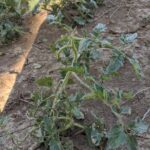
A special project group of the North Central Integrated Pest Management (IPM) Center wants to learn about your concerns and experiences with herbicide drift. The group is surveying growers of fruits, vegetables, and other specialty crops in the upper Midwest. To truly understand the frequency, severity, and economic impact of herbicide drift on specialty crops,…Read more about Grower Survey to Assess Herbicide Drift Damage in the North Central U.S.[Read More]
With many orchards suffering severe frost damage last year, our expectation is for very heavy flowering this spring. We’ll talk more about thinning next time, but it’s a pretty safe prediction that flowering will be heavy and so growers will really need to have their act together regarding thinning. So make sure now that your…Read more about A word on thinning[Read More]
A natural wonder will occur in 15 states this year: the emergence of the Brood X, 17-year periodical cicadas! Also known as “17-year or 13-year locusts” the last mass emergence of these insects occurred in 2004. Now, 17 years later, the immature cicadas will emerge from the ground, molt one last time to gain wings,…Read more about Plan ahead to protect young fruit trees from 17-year periodical cicadas emerging in May[Read More]
Small Farm Education Field Day July 29th, 2021 at the Purdue Student Farm. Small Farm Education Field Day Webinar Series August 2, 4, 6, 9, 11, 13, 2021. Watch for details at the Purdue Student Farm website https://www.purdue.edu/hla/sites/studentfarm/

Purdue University prohibits discrimination against any member of the University community on the basis of race, religion, color, sex, age, national origin or ancestry, genetic information, marital status, parental status, sexual orientation, gender identity and expression, disability, or status as a veteran. This material may be available in alternative formats. 1-888-EXT-INFO Disclaimer: Reference to products in this publication is not intended to be an endorsement to the exclusion of others which may have similar uses. Any person using products listed in this publication assumes full responsibility for their use in accordance with current directions of the manufacturer.