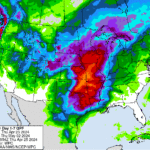
There is some very exciting news this week for Indiana with respect to the U.S. Drought Monitor. For the first time since April 25, 2023, the entire state is void of any Abnormally Dry (D0) or Drought (D1-D4) conditions. I would include the map but … drumroll, please … there’s nothing to show! This is…Read more about Indiana is entirely free of drought (Climate & Weather)[Read More]
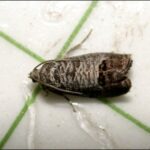
Each spring, I know some of you may be using insect-pest monitoring traps for the first time, whether it’s in your orchard or backyard! It’s exciting to have these tools – they do the work for you, luring insects into a single location so you don’t have to guess when pests might appear. Moreover, you…Read more about How to setup monitoring traps for tree fruit insect pests, like codling moth[Read More]
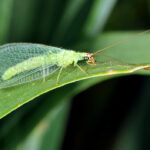
Lacewings are a group of insects commonly found in Indiana and throughout the world. There are several species, but the most common that you will see in Indiana include the green lacewing and the brown lacewing. They belong to a unique order of insects, Neuroptera, and are commonly referred to as aphid lions. The life…Read more about Insect Spotlight: Lacewing (Chrysoperla carnea)[Read More]
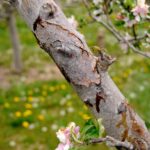
Fire blight, caused by the bacterium Erwinia amylovora, is a devastating disease of apples and pears. Epidemics of the disease develop quickly, particularly in a climate of warm, wet weather, with hail events. The type of management program developed by each orchard will vary considerably based upon a variety of orchard factors, including apple variety,…Read more about Fire Blight[Read More]
Dear Strawberry Chat Listeners, We will talk with Dr. Marvin Pritts on Wednesday, May 1st, 12:00-1:00 pm EST. Dr. Pritts is a professor in the horticulture department at Cornell and a very well-known expert in the strawberry industry. Many of you may have heard and read the book Strawberry Production Guide for the Northeast, Midwest,…Read more about Strawberry Chat with Dr. Marvin Pritts[Read More]
In addition to frost protection, disease management is pivotal during the blooming stage, particularly concerning gray mold (caused by Botrytis spp.) and Anthracnose. To protect the fruit, fungicide application should commence at or even before blooming. The pressure of both diseases is heavily influenced by weather conditions, with Botrytis favoring wet and cool climates and…Read more about Strawberry Disease Management Considerations at Blooming and Fruiting[Read More]
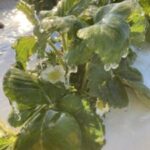
This article was written on April 17. Harvesting of high tunnel-grown strawberries has started from southern to central Indiana. Early cultivars in open-field plasticulture are fruiting in southern Indiana, with harvest right around the corner. The crops are generally a week earlier than last year. Late cultivars, second-year patches, and fields covered with straw in…Read more about Strawberry Crop Status Update[Read More]
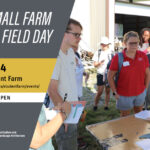
REGISTRATION NOW OPEN! Attendees, exhibitors, and sponsors register here: Purdue Small Farm Education Field Day July 25, 2024 The 2023 Purdue Small Farm Education Field Day was held at the Purdue Student Farm in West Lafayette, Indiana. With 105 participants registered, the in-person event featured an array of on-farm demonstrations and was a resounding success. Nearly 84% of…Read more about Purdue Small Farm Education Field Day registration now open[Read More]

REGISTRATION NOW OPEN! Register here: Purdue Fruit and Vegetable Field Day Purdue Extension presented its second Fruit and Vegetable Field Day post-pandemic at the Throckmorton Purdue Agriculture Center’s Meigs Horticulture Research Farm, located in Lafayette, on July 20th, 2023. Extension Specialists and Graduate Students presented specialty crop research to 90 attendees. Attendees had only good…Read more about Purdue Fruit and Vegetable Field Day Registration now open[Read More]

Purdue University prohibits discrimination against any member of the University community on the basis of race, religion, color, sex, age, national origin or ancestry, genetic information, marital status, parental status, sexual orientation, gender identity and expression, disability, or status as a veteran. This material may be available in alternative formats. 1-888-EXT-INFO Disclaimer: Reference to products in this publication is not intended to be an endorsement to the exclusion of others which may have similar uses. Any person using products listed in this publication assumes full responsibility for their use in accordance with current directions of the manufacturer.