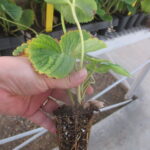
In Indiana, strawberry is traditionally grown as a perennial crop using a matted-row system, in which strawberry bare-root plants (Figure 1) are planted in spring on bare soil. Each year, fruit is harvested from mother plants and daughter plants that are derived from established runners in the past year. Strawberries can also be grown using…Read more about Getting Ready to Plant Strawberries in a Plasticulture System — Planting Materials[Read More]
Found 56 Articles
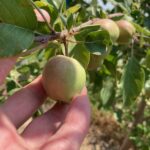
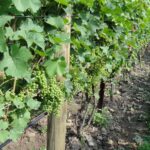
Now is the time to start thinking about leaf removal in grapevines. Cluster zone leaf removal can lower risk of disease, increase spray penetration and even improve fruit quality. The period immediately after bloom to 3 weeks post-bloom is the most effective time for leaf removal. Leaf pulling after this time can increase the risk…Read more about Grapevine leaf removal[Read More]

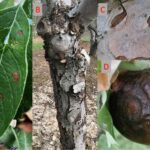
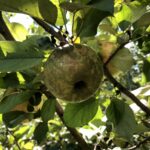
Frogeye leaf spot, caused by the fungal pathogen, Botryosphaeria obtusa, has been quite prevalent this year, probably due to the combination of potential (and realized) crop loss and our cool, wet spring. This is the same fungus that causes cankers on the tree, along with black rot of apple fruit (Fig. 1). Frogeye leaf spot…Read more about Frogeye leaf spot[Read More]
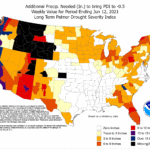
The news of the disastrous drought and extreme heat in the western United States (US) have local folks wondering if Indiana might be next. The latest release of the US Drought Monitor map (Figure 1) shows the exceptional drought in the western states as well as the expansion of extreme and exceptional drought in the…Read more about How likely will drought develop or worsen in Indiana?[Read More]

For those of you still fortunately enough to have apples, disease management continues to a greater degree than those of us without a crop. Around now (the beginning of cover sprays), the most serious apple pathogens are generally less active, terminal buds have set, leaves have hardened off (and are now less susceptible) and weather…Read more about Fungicide Use Midseason and On[Read More]
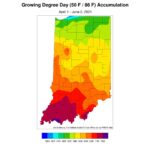
The month of May in Indiana was 2°F-4°F below normal across the state, based upon the new 1991-2020 climatological normals that were released last month. Climatological normals are roughly the 30-year average of weather variables and are updated every 10 years. Prior to the new normals being released, climatologists were using the 1981-2010 period for…Read more about Updated climate normals led to a cooler May[Read More]
Purdue University prohibits discrimination against any member of the University community on the basis of race, religion, color, sex, age, national origin or ancestry, genetic information, marital status, parental status, sexual orientation, gender identity and expression, disability, or status as a veteran. This material may be available in alternative formats. 1-888-EXT-INFO Disclaimer: Reference to products in this publication is not intended to be an endorsement to the exclusion of others which may have similar uses. Any person using products listed in this publication assumes full responsibility for their use in accordance with current directions of the manufacturer.