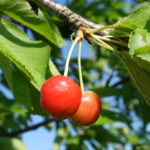
Apples are about 15-20 mm diameter and the thinning window is pretty much closed. Sevin may still have some effect at this stage. The only other effective material is ethephon, which is too risky for most growers.
Apples
Following the success of last year’s Summer Field Tour at Tuttle Orchards, this year we are again planning a combined summer field tour with the Indiana Horticultural Society, the Indiana Vegetable Growers’ Association and the Indiana Farm Market Association. We will be hosted by Garwood Orchards in La Porte, IN. While we encourage membership in…Read more about Summer Field Tour – fruits and vegetables[Read More]
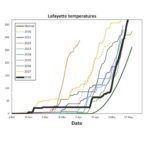
This is the last installment of our series on spring temperatures for 2018. What a strange year it has been. We started out very cool until mid-April and it didn’t really warm up until early May (Fig. 1). I think every day since then has been over 80F. Although the early spring was much cooler…Read more about Spring Temperatures[Read More]
We are delighted to be hosted for our Summer Tour by Garwood Orchards – one of the larger and best run operations in the state. This applies to their fruit, vegetable and farm marketing activities. Whether you are a fruit grower, a vegetable grower or a farm marketer, you are bound to be inspired and…Read more about Summer Field Tour[Read More]
We’re getting close to the time when growers need to make chemical thinning decisions – for many the most perplexing and risky decision they will make all year. Even with a relatively mild spring without too much interference by spring frosts, this is a tricky call to make. In most cases, there are plenty of…Read more about Apple Chemical Thinning[Read More]
June 26, 2018 Indiana Hort Society Summer Field Day Garwood Orchard, LaPorte, IN Contact Lori Jolly-Brown ljollybr@ purdue.edu October 17, 2018 Indiana Flower Growers Conference Daniel Turf Center Contact Lori Jolly-Brown ljollybr@ purdue.edu January 8, 2019 Illiana Vegetable Growers Symposium. Teibel’s Family Restaurant, Schererville, IN Contact Liz Maynard emaynard@purdue.edu https://ag.purdue.edu/hla/Extension/Pages/IVGS.aspx February 12-14, 2019 Indiana Hort…Read more about Upcoming Events[Read More]
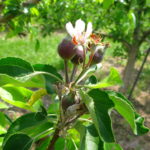
In case you blinked, we went from green tip to bloom in about three days, and by the time you read this, we will have passed through the blossom blight period. For most of the state, the late spring consisted of cool, dry weather that was not conducive to blight infection in the northern half…Read more about After Fire Blight Has Struck[Read More]
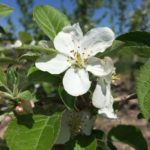
What a difference a couple of weeks of warm weather makes. Crop development is progressing rapidly with warmer weather. Apples in the south are around 10 mm, and in full bloom here in Lafayette. Peaches in southern areas of the state are still in the shuck, but barely. Folks in southern areas are getting ready…Read more about Crop Conditions[Read More]
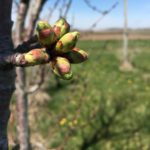
Fruit crops are finally starting to grow in the Lafayette area after a few days of warmer weather. Apples are at 1/2 inch green to tight cluster. Peaches have 1/2 inch vegetative shoots. There are no live flower buds in our planting. Cherries are at swollen bud. Early grapes varieties are at swell. Raspberries have…Read more about Crop Conditions[Read More]