
As the spray season approaches, it is good to remember the profound impact water quality has on the performance of pesticides used by fruit growers. Purdue Pesticides Program recently published a guide, The Impact of Water Quality on Pesticide Performance PPP-86, available at the Education Store, 1-888-EXT-INFO or www.extension.purdue.edu/store/. I highly recommend this guide to…Read more about Effects of Water Quality of Pesticides[Read More]
Blueberry
The results of a historical primate behavior analysis suggest that species with fruit-filled diets evolved larger brains. A popular theory among evolutionary biologists is that we have our sociability to thank for our big brains. This “social brain hypothesis” suggests that the mental effort involved in interacting with others eventually increased our cognitive capacity. However,…Read more about New study: Diet contributes to brain size[Read More]
Following a very early warm-up, temperatures cooled off the middle of March slowing crop development and bringing us back closer to normal. In southern areas, peaches are in full bloom, but only just showing a little pink in more northern areas. Apples are still in tight cluster and probably at least 10 days from full…Read more about Crop Conditions[Read More]
Spotted wing drosophila continue to plague raspberry, blackberry, blueberry, and grape growers. I have had some reports of poor control. There are a number of reasons that control of any insect may be poor. If you are not getting the level of control you expect, here are a few things to consider. Is your sprayer…Read more about Spotted Wing Drosophila[Read More]
Plant nutritional status is important for all phases of plant growth and has a direct effect on vigor, fruitfulness, cold hardiness, and other factors. Tissue analysis is the most reliable means of determining plant nutritional status. Combined with soil testing, tissue analysis can help pinpoint the source of problems and determine what measures may be…Read more about Tissue analysis for grapes and small fruit[Read More]
Populations of spotted wing drosophila continue to increase. As best I can tell, numbers are not at the devastating levels that they were a couple of years ago, but there are still plenty around to cause very serious injury to small fruit. Raspberry, blackberry, and blueberry growers should be on a regular spray program at…Read more about Spotted Wing Drosophila[Read More]
Mites continue to be a concern for both fruit and vegetable growers. We are just now at the historical peak population time for European red mites. Fruit growers should be scouting their more susceptible blocks regularly for the next few weeks. The thresholds for treatment increase as we get later in the season. See https://extension.entm.purdue.edu/publications/E-258/E-258.html…Read more about European Red Mites[Read More]
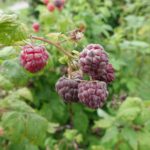
Approximately 40 growers attended the Society’s summer field day a couple of weeks ago. Thanks go to David, Valerie and Theresa Doud for being wonderful hosts. We saw apples, peaches and strawberries, and also some of the new MAIA apple selections being developed. After lunch we visited Cordes Berry Farm which consists of over 9…Read more about Indiana Hort Society summer field day[Read More]
We caught our first spotted wing drosophila adults in traps in Elkhart County over the weekend. We can assume that they will be flying and laying their eggs in developing fruit of grape, raspberry, blackberry, and blueberry from this point until the end of the season. In addition to checking traps, growers should be inspecting…Read more about Spotted Wing Drosophila[Read More]