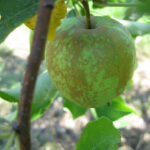
Currently, the US Drought Monitor (https://droughtmonitor.unl.edu/CurrentMap/StateDroughtMonitor.aspx?IN) places Indiana in the ‘abnormally dry’ category. With no rain in our 10 day forecast, I expect that to only get worse, and with it, powdery mildew on all fruit crops. Powdery mildew is identified by the white, powdery growth on leaves and shoots that consist of the fungal…Read more about Apple powdery mildew[Read More]
Pome Fruits
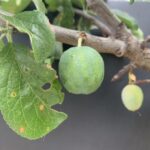
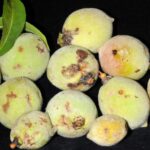
We all know that growing and protecting delicious fruit is a challenge! Whether you’re producing tree fruits, stone fruits, berries, or drupes, all kinds of insect pests are out to exploit the fruits of your labor. Despite our best efforts, sometimes a few insect pests slip under the radar and all you can do is…Read more about Diagnosing fruit insect pests using signs and symptoms[Read More]
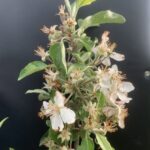
At the Meigs Horticultural facility we are now seeing, more clearly, the damages from the April 24th freezing temperatures. All fruit crops are starting to grow out of that damage, which is good to see. I would still say that our loss on crops across the farm is 10-15% except for the Shiro Plums. The…Read more about Crop Conditions[Read More]
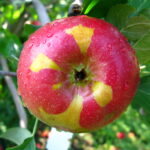
Tank mixtures (or tank-mixing) describes the process where multiple crop protection chemicals are combined in a single tank for simultaneous application. Tank-mixing pesticides allows the grower to make a single application but manage multiple pests AND pesticide resistance issues. All specialty crops, especially fruit crops, have more pests and pathogens than field crops, along with…Read more about Tank Mixes[Read More]
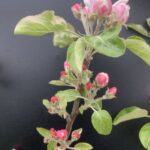
At the Meigs Horticultural facility on April 24th we experienced freezing temperatures from 2 am until 7 am, with a low of 26.8 degrees Fahrenheit for one hour. The damage to fruit crops on the farm is scattered depending on varieties. A rough estimate would be 10% cold damage on the crops. The growth stages…Read more about Crop Conditions[Read More]
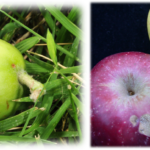
The plum curculio (Conotrachelus nenuphar) is a small “snout” beetle (also known as a weevil – one of my favorite beetle groups!) that will feed on apples, peaches, pears, plums, and cherries. Both adults and larvae have chewing mouthparts and can damage fruits; adults by feeding and laying eggs in newly set fruit and larvae…Read more about Tips for managing plum curculio in tree fruit[Read More]
We’re getting close to the time when growers need to make chemical thinning decisions – for many the most perplexing and risky decision they will make all year. This is usually a tricky call to make. Remember that only about 5-10% fruit set is usually enough for a full crop. In other words, 90 out…Read more about Chemical thinning[Read More]
Once flowers open in the spring, we’re hoping for warmer weather so the bees will transfer pollen and for rapid pollen tube growth. As we all know, apples require cross pollination, so for example Golden Delicious pollen will not fertilize Golden Delicious flowers. We rely on bees and other insects to transfer pollen from one…Read more about Pollination – a refresher[Read More]
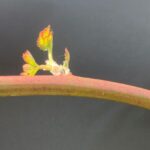
In just two weeks there has been significant bud development on our fruit trees here in Lafayette, IN. Our Shiro Plums are in full bloom and the bees are busy pollinating these trees. There is one Apricot and some early season Apple trees in our mixed variety blocks that are also in full bloom. All…Read more about Crop Conditions[Read More]