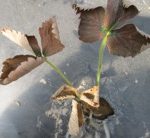
Strawberries are primarily grown in the matted row system in Indiana, in which bare-root strawberry plants are set in the spring, fruit is first harvested in the second year and plantings are renovated each year for a few seasons. Growers in Southern Indiana have expressed interest in growing strawberries in the annual plasticultural system. With…Read more about Annual Strawberry Production in Southern Indiana[Read More]
Crop Management

Stone Fruit: At our orchard, we lost our stone fruit with the -20 degree F temperatures this winter. For those of you fortunate enough to have fruit, frequent and heavy rain present problems multiple problems, namely bacterial spot and brown rot. Three weeks before harvest, cease bacterial spot sprays, even though bacterial spot may continue…Read more about Almost August Tree Fruit Update[Read More]
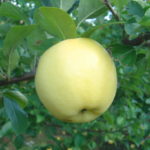
Although PristineTM was selected in 1982, its history goes back to the early days of the PRI breeding program. From an original cross of Rome Beauty with Malus floribunda 821, selections and hybridizations were made incorporating Golden Delicious, McIntosh, Starking Delicious and Cazumat along the way. The cross that resulted in PristineTM was Coop 10…Read more about PristineTM Apple[Read More]
ReTain (AVG) is a plant growth regulator that blocks the production of ethylene. When ReTain is applied to apple, several ripening processes are slowed, including preharvest drop, fruit flesh softening, starch disappearance, and red color formation. In order for ReTain to be effective it must be applied well in advance of the climacteric rise in…Read more about Timing Retain Sprays[Read More]
Preharvest drop refers to the process where fruit fall from the tree prior to harvest. Not all apple varieties are affected, but with some, such as McIntosh and Pristine, pre-harvest drop can be extreme. Several growth regulator materials are available to growers to help reduce pre-harvest drop. These materials are often referred to as “stop-drop”…Read more about Control Of Preharvest Drop with NAA[Read More]
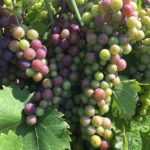
Early grapes are just beginning to soften and color (veraison). Summer raspberry harvest if winding down and fall bearing types are flowering. Blueberry harvest continues. Japanese beetle numbers continue to be relatively high in the Lafayette area. Peach harvest (for those fortunate to have a crop) has begun. Early apple cultivars are approaching harvest.
Plant nutritional status is important for all phases of plant growth and has a direct effect on vigor, fruitfulness, cold hardiness, and other factors. Tissue analysis is the most reliable means of determining plant nutritional status. Combined with soil testing, tissue analysis can help pinpoint the source of problems and determine what measures may be…Read more about Tissue Analysis for Small Fruit and Grapes[Read More]
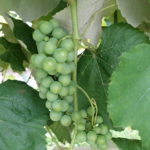
This was a very short year for strawberries due to the record warmth in May. By now, most harvest is over. As soon as harvest is done, it’s time to begin the renovation process. Matted row strawberry plantings must be renovated each year to establish new crowns for the following year’s crop. For best results,…Read more about Strawberry Renovation[Read More]
Now that we are past fruit set, it is easy to tell what level of crop we are carrying. With the fairly extensive winter injury this year, many varieties will have a light crop borne on secondary or tertiary shoots. Little if any crop control will be needed in those. However, many of the plantings…Read more about Crop Management in Grapes[Read More]