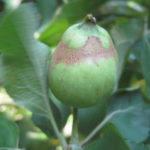
The recent spate of cool, wet weather has left one organism happy, Venturia inaequalis, the fungus that causes apple scab. Most of the state just underwent an extreme scab period, and unfortunately, few of us could do anything about it because of the combination of rain and wind. The revised Mill’s table (from http://www.fruit.cornell.edu/tfabp/revmills.htm )identifies…Read more about Apple Scab[Read More]
Crop Management
Due to the COVID crisis, all Purdue Extension meetings have been cancelled until further notice. Some may be offered by distance education, but no in-person meetings will be allowed. Most Purdue Extension staff are working from home. We are available to answer your questions by email, phone or through social media. Our contact information is…Read more about Extension Events[Read More]
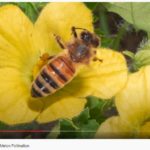
Very happy to share these videos, produced by the Extension Entomology team, highlighting our collaboration with the Indiana melon industry on pollinators and pesticides. We are always looking for partners, just reach out to your Extension Specialists to find out how. Click here for video Click here for video Click here for video
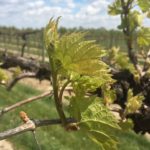
Growth and development in fruit crops is continuing slowly across the state due to cool temperatures and resulting low growing degree day accumulation. It’s been a rough start to spring to say the least. Frost and freeze damage from the April 15-16 events has become more obvious, and there are still risks of freezing temperatures in…Read more about Crop Conditions[Read More]
There has been some talk about the use of promalin to help overcome the damaging effects of freezing temperatures. Only a small amount of research has been conducted on this. Dr. Steve McArtney showed that Promalin applied after damaging freeze events could increase parthenocarpic (seedless) fruit development, but not every time. Keep in mind this…Read more about Frost recovery treatments[Read More]
What is the best way to assess bud damage from cold temperatures? Drs. Tara Baugher and Jim Schupp at Penn. State University have put together a nice page with some excellent photos explaining how to assess fruit bud survival: I would add that unless you find that more than 90% of your buds have been…Read more about Assessing Fruit Bud Survival and Crop Potential[Read More]
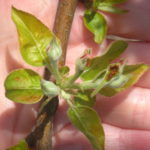
In the Midwest, extreme weather events are, unfortunately, regular occurrences, even in extremely unusual times. At this point, though, it just feels like a pile-on. Most fruit crops planted in Indiana are tolerant of the cold when they are fully dormant. In the spring, as trees break bud and begin to flower, they lose cold…Read more about After the Freeze 2020[Read More]
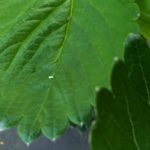
This winter-spring has been my first excursion into growing strawberries in a high tunnel. It didn’t take much for our own Wenjing Guan to convince me to plant some; who doesn’t love to eat fresh strawberries? We planted them back in October and I just peeked at them every couple of weeks throughout the winter,…Read more about Strawberry Observations from an Entomologist[Read More]
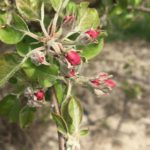
Apples in Lafayette are approaching pink. IN more southern areas of the state apples are past full bloom and into petal fall. Frost damage to crops has been widespread in southern areas of the state. Fruit crops are in early stages of growth across the state. In southern areas peaches and apples are in bloom…Read more about Crop Conditions[Read More]
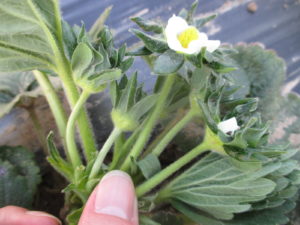
Warm temperatures this week greatly encouraged strawberry growth and development. Some of the early cultivars may have entered the open blossom stage especially if they are grown with the annual plasticulture system in southern Indiana. Open flowers cannot tolerate temperatures lower than 30°F, while popcorn stage flowers (Figure 1) and tight buds may tolerant temperatures…Read more about Strawberry Growers Should be Prepared for Cold Protection[Read More]