
The periodical cicada (Figure 1) emergence is expected to begin shortly. Female cicadas lay eggs in 200+ woody tree species (Figure 2), and they have a strong preference for grapevines, apples, cherries, peaches, & plums. Egg laying can weaken and damage branches, causing them to turn brown, die, and break off. The loss of branches…Read more about Protect your grapevines from cicadas[Read More]
Crop Management
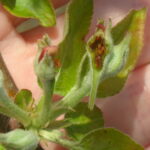
Freeze: There really isn’t much that can be added to the wonderful and unfortunately timely article about Frost. Critical Temperatures and Frost Protection by Rob Crassweller at https://extension.psu.edu/frost-critical-temperatures-and-frost-protection With a frost to freeze expected to cover most of the state on April 21 and 22, there will certainly be crop damage and loss (Fig. 1)….Read more about Freeze[Read More]
A natural wonder will occur in 15 states this year: the emergence of the Brood X, 17-year periodical cicadas! Also known as “17-year or 13-year locusts” the last mass emergence of these insects occurred in 2004. Now, 17 years later, the immature cicadas will emerge from the ground, molt one last time to gain wings,…Read more about Plan ahead to protect young fruit trees from 17-year periodical cicadas emerging in May[Read More]
With many orchards suffering severe frost damage last year, our expectation is for very heavy flowering this spring. We’ll talk more about thinning next time, but it’s a pretty safe prediction that flowering will be heavy and so growers will really need to have their act together regarding thinning. So make sure now that your…Read more about A word on thinning[Read More]
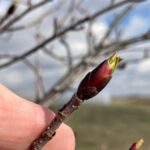
Warm temperatures over the last week or so have accelerated growth rapidly. In Lafayette, apples are nearing green tip, and strawberries at full bloom. Blackberries are pushing half-inch green. Further south in the state, temperatures are in the mid 70’s, apricots are in full bloom and peaches not quite at pink (thanks to Applacres for…Read more about Crop Conditions[Read More]
Did you know that almost half of the food we consume every day comes from crops the USDA categorizes as “minor” or “specialty” crops? Compared to the acreage of corn and soybean in the Midwest, fruit and vegetable crops are only a small percentage of crops grown. Not surprisingly, agrochemical companies focus their effort on…Read more about The IR-4 Project and Indiana Growers[Read More]
The USDA Coronavirus Assistance Program (CFAP) is accepting applications up until tomorrow (Sept. 11). These should be made by contacting a USDA-FSA office. Producers of specialty crops are eligible for CFAP payments for losses for the following three categories: Had crops that suffered a five percent-or-greater reduction in sales price between mid-January and mid-April as…Read more about Coronavirus Food Assistance Program for Specialty Crops[Read More]
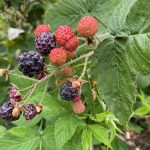
Grape harvest continues. Recent rainy weather is making late season fruit rots more problematic on susceptible varieties. Apples are sizing up nicely and mid-season varieties are beginning to ripen. Primocane black and red raspberries are beginning to ripen. Black Magic primocane blackberry harvest is winding down and APF45 harvest is just starting. Pawpaw fruit are…Read more about Crop Conditions[Read More]
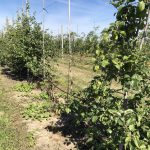
Modern clonal rootstocks are the foundation-and literal roots– to modern apple growing. These rootstocks ensure growers have orchards of relatively small trees that can be densely planted and result in earlier and greater bearing than what was historically possible. This is an obvious improvement over waiting multiple decades for an orchard to become profitable. However,…Read more about Rootstock problems are neither new nor unique…” Cummings and Norton, 1974[Read More]
This video guides you for a tour of strawberry production in high tunnels in Indiana. Additional videos addressing specific production practices will be available in the future. Please stay tuned for the update of plasticulture strawberry research from Purdue.