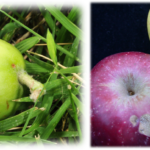
The plum curculio (Conotrachelus nenuphar) is a small “snout” beetle (also known as a weevil – one of my favorite beetle groups!) that will feed on apples, peaches, pears, plums, and cherries. Both adults and larvae have chewing mouthparts and can damage fruits; adults by feeding and laying eggs in newly set fruit and larvae…Read more about Tips for managing plum curculio in tree fruit[Read More]
Crop Management
We’re getting close to the time when growers need to make chemical thinning decisions – for many the most perplexing and risky decision they will make all year. This is usually a tricky call to make. Remember that only about 5-10% fruit set is usually enough for a full crop. In other words, 90 out…Read more about Chemical thinning[Read More]
Once flowers open in the spring, we’re hoping for warmer weather so the bees will transfer pollen and for rapid pollen tube growth. As we all know, apples require cross pollination, so for example Golden Delicious pollen will not fertilize Golden Delicious flowers. We rely on bees and other insects to transfer pollen from one…Read more about Pollination – a refresher[Read More]
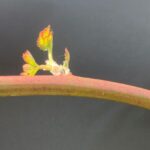
In just two weeks there has been significant bud development on our fruit trees here in Lafayette, IN. Our Shiro Plums are in full bloom and the bees are busy pollinating these trees. There is one Apricot and some early season Apple trees in our mixed variety blocks that are also in full bloom. All…Read more about Crop Conditions[Read More]
As we continue to walk on really expensive eggshells in 2023, it’s important to recognize that fungicide availability along with the effectiveness of available fungicides (and their price) will impact orchard, vineyard and berry patch management 2023. For all growers, the number 1 problem continues to be fungicide resistance in a diversity of fruit crops….Read more about Fungicide resistance in a diversity of fruit crops[Read More]
Using straws is the standard practice for winter protection in matted-row strawberry production. In contrast, plasticulture strawberries commonly use floating rows for winter and spring frost protection. This article will discuss the differences between managing floating row covers vs. straws in the spring. When straw is used, it blocks the light. There is hardly any…Read more about Spring Considerations on Using Floating Row Covers in Plasticulture Strawberry[Read More]
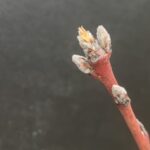
We have had a warm winter and early spring, except for the negative temperatures we experienced right before Christmas. Some fruit crops are already beginning development in Lafayette, Indiana. Apples remain dormant except for some of the Honey Crisp blocks showing Silver Tip and a few Crab Apple varieties showing Green Tip. Majority of the…Read more about Crop Conditions[Read More]
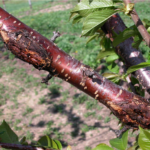
The Tools: Hand lens-10x or 15x -To correctly use a hand lens, place the lens directly in front of your eye and bring the sample you are examining towards the lens until the object comes into focus. Knife – good for cutting into stems or root tissue. Pruning shears- for taking samples – disinfest blades…Read more about Scouting 101[Read More]
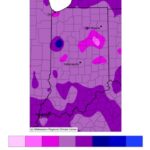
Extreme cold temperatures were experienced across the state on December 23-24th 2022 (Figure 1). Temperatures ranged from -10- -5° F across most of the state with temperatures dipping below -10°F in some areas. Since then, there have been some additional cold events, such as 7° F on January 31-February 1 and 12° F on March…Read more about Cold Weather Impact on Grapevines[Read More]
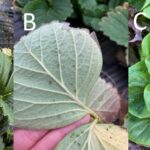
After a long cold winter under protection, nothing signals spring like the first blooms on strawberry. ‘Tis the season in our high tunnels and thus time to provide a few reminders/updates on how to protect the development of these early fruits from insect pests. The first thing you want to do is examine the health…Read more about Protecting Flowering Spring Strawberries from Insect Pests[Read More]