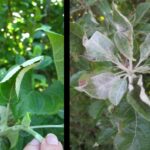
All that new, succulent growth needs to be protected to prevent primary (and even secondary!) scab (Fig. 1). We’re past the point where copper can be safely used, so protectant fungicides for scab control at this stage include mancozeb, ziram and captan. As an added bonus, all of these protect against the summer rots, and…Read more about Apple Disease Management Notes for April[Read More]
Crop Management
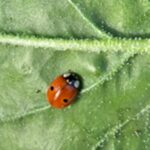
The Two-spotted lady beetle, Adalia bipunctata, is a common insect predator, meaning it feeds on other, smaller bugs. Native to North America and Europe, the Two-spotted lady beetle is distinguished from other lady beetles by its oblong shape and two large black spots on either of its back, as well as its large white spots…Read more about Insect Spotlight: Two-spotted lady beetle[Read More]
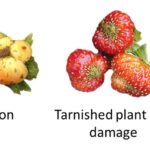
Overwintering strawberries in high tunnels can jumpstart plant growth in the spring and protect developing flowers from frost damage and disease. However, this protected environment is also ideal for some pests, like spider mites and aphids, that can successfully overwinter and build their populations. We conducted an experiment on ‘Chandler’ strawberry where it was grown…Read more about Overwintering insects on high tunnel strawberry and impacts on yield[Read More]
As of right now, we simply do not know if we will have crops from our woody fruit producing plants, from apples to grapes to peaches. Remember: The ability to produce fruit is determined in the spring with flower development. Any factor, whether abiotic, insect or pathogen, that interferes with flower development will impact fruit…Read more about Early season disease management[Read More]
Attention strawberry growers, A group of scientists are conducting a survey about growers’ current practices and opinions about agricultural mulches in their strawberry fields. They hope growers could share with the research team information about current practices and opinions about different types of agricultural mulches by completing a short online survey. The survey is located…Read more about Strawberry Agricultural Mulches Survey[Read More]
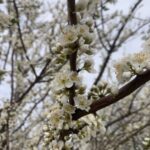
The Purdue Meigs Horticulture Facility in Lafayette, Indiana just south of campus is looking lively this time of the year. All our fruit crops and trees have begun development. I know last year I said we had a warm winter and early spring but this year was much warmer and earlier. I was working fields…Read more about Crop Conditions[Read More]
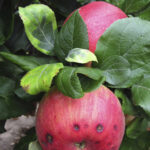
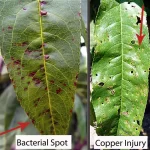
In Indiana, our ‘normal’ or average weather is one of extremes, punctuated with an occasional glorious summer day of sun and 76 degrees F. This year has been one of flooding and droughts, freezes and scorching heat. Again. With these weather extremes come physiological disorders and summer fruit rots, for those lucky enough to even…Read more about Pits, Spots and Rots[Read More]
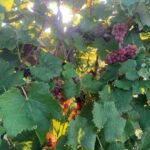
Control Of Preharvest Drop with NAA: Preharvest drop refers to the process where fruit fall from the tree prior to harvest. Not all apple varieties are affected, but with some, such as McIntosh and Pristine, pre-harvest drop can be extreme. Several growth regulator materials are available to growers to help reduce pre-harvest drop. These materials…Read more about Control Of Preharvest Drop with NAA[Read More]
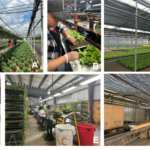
I visited Kube-Pak (Allentown, NJ) during North American Strawberry Growers Summer Tour. Kube-Pak wholesales bedding plants, plugs, potted plants and more. Our visit is at Kube-Pak’s peak time of strawberry business. Mr. Rob Swanekamp showed us the steps of growing strawberry plugs, from tip production to shipping. The strawberry plugs’ shipping date starts in mid-July…Read more about Strawberry Plug Production at Kube-Pak[Read More]