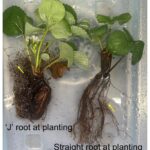
Bare-root strawberry plants often arrive with roots that are 6 to 10 inches long. For optimal planting, the roots should be kept straight, which requires digging a deep hole or using specialized tools. If the planting hole is too shallow, the roots may bend and form what is known as a ‘J-root’. You may have…Read more about ‘J’ Rooting of Bare-root Strawberry Plants[Read More]
Crop Management
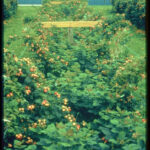
Interested in planting brambles? Here’s what you need to know! What are brambles? Bramble crops are from the genus Rubus and include blackberries and raspberries. Brambles are among the easiest fruit crops to grow, and the fruit is in high demand due to its exotic flavor and high nutritional value. Brambles can be planted in…Read more about Interested in Planting Brambles?[Read More]
We’re getting close to the time when growers need to make chemical thinning decisions – for many the most perplexing and risky decision they will make all year. This is usually a tricky call to make, even more so when we have had spring frosts. Luckily in most places the spring frosts have not been…Read more about Chemical thinning[Read More]
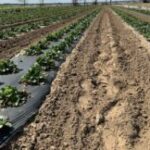
Crop Status Plug plants set on black plastic mulch in late summer and early fall are approaching full bloom. Some early blooms may have been damaged by recent low temperatures. Moving forward, growers should remain vigilant in protecting these crops from potential frost injury (Figure 1). Bare-root plants that were planted on white plastic during…Read more about Plasticulture Strawberry Update from Southern Indiana[Read More]
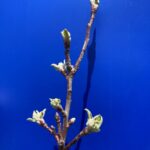
Welcome to Spring! Things have begun to green up here at Meigs as we’ve had some warmer weather and plenty of rain. Consequently, this week has been a push to make our first-of-season herbicide and fungicide applications in the orchard. Though we breached 80F a couple times already, our fruit trees and brambles do not…Read more about Crop Conditions[Read More]
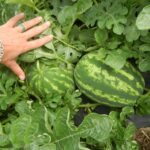
What a wet July we have had so far.. and summer for that matter! The timing and amount of rain has made it difficult to complete cover sprays in a timely manner. Even with all of this rain and limited spray windows, all of our fruit crops have remained disease free. Our peaches and blackberries…Read more about Crop conditions[Read More]
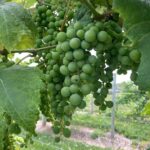
Here at the Meigs Horticulture Facility in Lafayette, Indiana we couldn’t ask for better crop conditions. We have been receiving good amounts of rain as needed for fruit maturation, without experiencing any flooding. The Japanese beetles seem to be our biggest issue right now across the board. Still no disease pressure to report, we will…Read more about Crop Conditions[Read More]
This year, the strawberry season throughout Indiana seems to be early by about 10 days to 2 weeks, regardless of the production system. In southern Indiana, I heard the harvest lasted from mid/late April until mid-May in some fields. In central I ndiana, the harvest started in mid-May and is nearing its end in early…Read more about Do June-bearing Strawberries still Harvest in June?[Read More]
Shoot Thinning The optimum shoot density is 5-6 shoots per foot of row. Thinning to this density can help reduce shading, adjust the crop, lower the risk of disease and improve spray penetration. The optimal time for shoot thinning is before the shoots reach 12 inches. Removing the shoots may be more difficult once they’ve…Read more about Grapevine Canopy Management[Read More]