
Many readers will remember when a massive brood of periodical cicadas (Brood X) emerged throughout Indiana back in 2021. With their dark bodies, red eyes, and orange wings, these insects look like something straight out of the X-files, am I right?? There was lots of noise (male cicadas singing for the females!), lots of cast…Read more about They’re baaaaack: Rare double brood emergence of periodical cicadas this year[Read More]
Crop Management
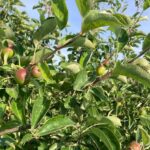
Everything here at the Meigs Horticulture Farm in Lafayette, Indiana seems to be off to a great start of fruit development. We have had an abundance of Strawberries the last two weeks and will for the next few weeks. We were able to find a handful of peaches on our trees.. no more than a…Read more about Crop conditions at Purdue Meigs Horticulture Farm[Read More]

According to the newly released 2022 Census of Agriculture, Indiana has 248 farms growing strawberries, a 25% increase from 2017 when there were 199 such farms. This rise is particularly notable because the number of strawberry farms had decreased from 250 to 199 between 2012 and 2017. Despite the increase in the number of farms…Read more about Indiana Strawberry Production Census[Read More]

REGISTRATION NOW OPEN! We are happy to announce that Purdue Extension is presenting its annual Fruit and Vegetable Field Day on July 18, 2024, at the Throckmorton/Meigs Horticulture Farm, Lafayette, IN. Register here: Purdue Fruit and Vegetable Field Day Contact Lori Jolly-Brown or Petrus Langenhoven if you have any questions. Presentations: Julia Wooby, Ian Kaplan, Laura Ingwell Trap Crop…Read more about Purdue Fruit and Vegetable Field Day[Read More]
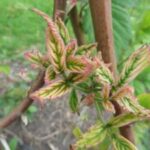
Mesotrione is a Group 27 (HPPD-inhibitor) herbicide. It is registered as a stand-alone active ingredient in products such as Callisto®, Argos®, and Tenacity® among several others. It is also a common ingredient in pre-mix corn herbicides such as Acuron, Calliso® GT, Optero®, Storen® and many others. Mesotrione has both pre-emergence and post-emergence activity on select…Read more about Callisto® and Brambles- A Cautious Reminder[Read More]
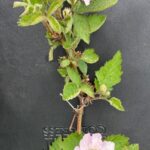
All of our fruit trees at the Meigs Horticulture Facility have a lot of fruit despite the late frosts we had this spring. We have been busy applying our cover sprays and even had to thin our Apples. We will also have a lot of Strawberries this year, they are starting to turn red this…Read more about Crop Conditions[Read More]
Leaving behind the fourth or fifth wettest April, rains continue in May. Many growers are confronted with serious issues with respect to scab management. Depending where you are in the state, development is at anywhere from petal fall to 2nd cover (kings at 10-11mm) or even further along. Against some pretty grim probabilities, most of…Read more about Scab management[Read More]

As we head into the strawberry season, I anticipate more questions from growers when it comes to pests that directly damage the fruit. One that was reported recently was the Strawberry sap beetle. This beetle belongs to the family Nitidulidae, which are broadly referred to as sap or picnic beetles. The Strawberry sap beetle overwinters…Read more about Strawberry sap beetles (Stelidota geminata)[Read More]
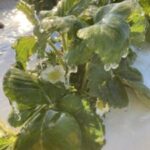
This article was written on April 17. Harvesting of high tunnel-grown strawberries has started from southern to central Indiana. Early cultivars in open-field plasticulture are fruiting in southern Indiana, with harvest right around the corner. The crops are generally a week earlier than last year. Late cultivars, second-year patches, and fields covered with straw in…Read more about Strawberry Crop Status Update[Read More]

There has been a lot of movement just in the last two weeks. We are seeing a lot of trees about to flower or in full flower. The grapes are swelling and some early varieties are at bud burst. Our field Strawberries are at tight bud or popcorn stage now. The Strawberries in the high…Read more about Crop Conditions[Read More]