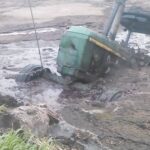
Indiana seems to experience the entirety of US weather, sometimes in the same day. The recent spate of cool, wet weather has left apple scab one happy fungus (Fig. 1). Most of the state just underwent an extreme scab period, and unfortunately, few of us could do anything about it because of the combination of…Read more about Wet weather & apple scab[Read More]
Crop Management
We’re getting close to the time when growers need to make chemical thinning decisions – for many the most perplexing and risky decision they will make all year. This is usually a tricky call to make. Remember that only about 5-10% fruit set is usually enough for a full crop. In other words, 90 out…Read more about Chemical thinning[Read More]
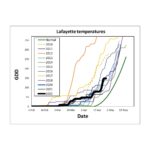
Spring temperatures It seems like spring is progressing slowly, and in some respects it is. At this time of the year, the rate of plant development depends largely on temperature. The warmer it is, the faster plants develop. Early in the season we hope for cool weather to slow down bud development. This is so…Read more about Spring temperatures, pollination- a refresher[Read More]
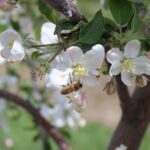
Throughout the state, most of us are in some stage of tree fruit bloom and as fruit producers, you all know how important insect pollinators are for ensuring good fruit set and even quality! Whether you’re producing tree fruits, nuts, or small fruit (even grapes, although they aren’t dependent on insect pollinators), we know that…Read more about Protecting pollinators during bloom[Read More]
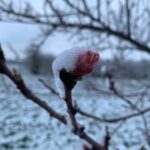
Many people, including me, were surprised to look out the window Monday morning and see the ground and trees white with snow. A heck of a way to start the week! Although it looked frightening to see trees, buds and flowers covered in snow, luckily temperatures did not drop too low. In general, lows were…Read more about Easter snowfall[Read More]
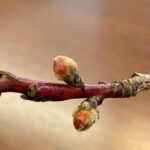
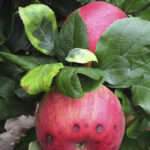
In Indiana, our ‘normal’ or average weather is one of extremes, punctuated with an occasional glorious summer day of sun and 76 degrees F. This year has been one of flooding and droughts, freezes and scorching heat. Again. With these weather extremes come physiological disorders and summer fruit rots, for those lucky enough to even…Read more about Pits, Spots and Rots[Read More]
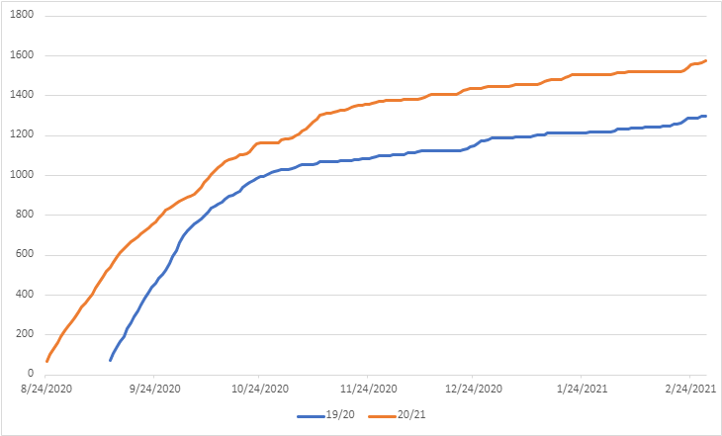
Growers interested in growing strawberries on a plasticulture system can choose to use plug plants or bare-root plants. The pros and cons of using each of the planting materials was discussed in a previous article. This article will discuss the importance of planting dates for growers who chose to use plug plants. In the…Read more about Getting Ready to Plant Strawberries in a Plasticulture System – Planting Date[Read More]
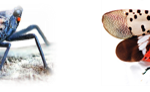
We were all hoping it would happen later, but unfortunately the spotted lanternfly (SLF) (Lycorma delicatula) (Figure 1), an invasive planthopper with a piercing-sucking feeding strategy, was officially detected in Vevay, Indiana (Switzerland County) for the first time in July 2021. You can see pictures and read more about the detection at the Indiana Department…Read more about Spotted lanternfly has been detected in Indiana[Read More]