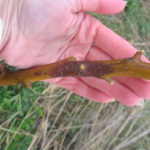
Diseases that affect the twigs, branches, and the main trunk of a tree are referred to as cankers or blights. Canker diseases can be a serious problem in the orchard, vineyard, berry or bramble patch when they are not properly managed, and even when they are. All woody plants can be infected by canker pathogens….Read more about Opportunistic Canker Pathogens[Read More]
Crop Management
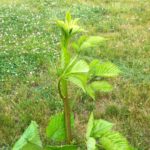
One of the most important management practices for production of blackberries and black raspberries is summer tipping of the primocanes. This practice removes the apical dominance of the shoot tip, resulting in several lateral branches below the tip, and a stronger primocane. Next year’s crop will primarily be produced from buds on the lateral branches,…Read more about Summer Cane Tipping in Brambles[Read More]
Canopy management is a critical production practice for improved sunlight exposure. Pulling shoots off the top of the rows in high cordon-trained vines improves sunlight exposure to the leaves at the base of the shoots. Those basal nodes will be the ones saved as spurs next year during pruning, and sunlight improves bud fruitfulness and…Read more about Canopy Management in Grapes[Read More]
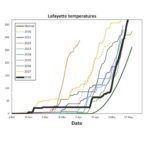
This is the last installment of our series on spring temperatures for 2018. What a strange year it has been. We started out very cool until mid-April and it didn’t really warm up until early May (Fig. 1). I think every day since then has been over 80F. Although the early spring was much cooler…Read more about Spring Temperatures[Read More]
We’re getting close to the time when growers need to make chemical thinning decisions – for many the most perplexing and risky decision they will make all year. Even with a relatively mild spring without too much interference by spring frosts, this is a tricky call to make. In most cases, there are plenty of…Read more about Apple Chemical Thinning[Read More]

We all know that it in the last two weeks, temperatures have warmed up considerably, but when we plot out the growing degree days (GDD), we can see how dramatic this warming trend has been (Figure 1). In Lafayette a couple of weeks ago, we had accumulated less than 100 GDD – now we’re closing…Read more about Spring Temperatures[Read More]
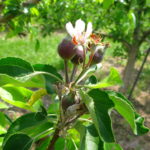
In case you blinked, we went from green tip to bloom in about three days, and by the time you read this, we will have passed through the blossom blight period. For most of the state, the late spring consisted of cool, dry weather that was not conducive to blight infection in the northern half…Read more about After Fire Blight Has Struck[Read More]
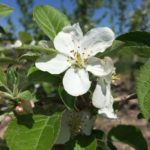
What a difference a couple of weeks of warm weather makes. Crop development is progressing rapidly with warmer weather. Apples in the south are around 10 mm, and in full bloom here in Lafayette. Peaches in southern areas of the state are still in the shuck, but barely. Folks in southern areas are getting ready…Read more about Crop Conditions[Read More]
Early spring is a good time to make the first herbicide application of the year. There are several options for fruit crops including both pre- and post-emergent herbicides. See the weed control chapter in the 2018 Midwest Fruit Pest Management Guide for a complete list of products. In most situations, there will be some emerged…Read more about Spring Weed Management in Fruit Crops[Read More]
Of course, we all hope for a late spring to help avoid the risk of damage from late spring frosts. But when the temperature warms up then turns cold again, it leaves us in a real bind. The warm temperatures push tree development, then we want the warmer conditions for good pollinating weather. When we…Read more about Increasing Apple Fruit Set in Cold Springs[Read More]