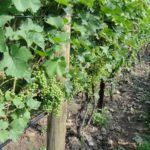
Canopy management is a critical production practice for improved sunlight exposure. Pulling shoots off the top of the rows improves sunlight exposure to the leaves at the base of the shoots. Those nodes will be the ones saved as spurs next year during pruning and sunlight improves bud fruitfulness and cane hardiness. Shoot positioning is…Read more about Canopy Management and Leaf Removal in Grapes[Read More]
Crop Management
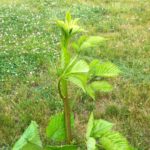
One of the most important management practices for production of blackberries and black raspberries is summer tipping of the primocanes. This practice removes the apical dominance of the shoot tip, resulting in several lateral branches below the tip, and a stronger primocane. Next year’s crop will primarily be produced from buds on the lateral branches,…Read more about Tipping blackberry and black raspberry primocanes[Read More]
The Office of the Indiana State Chemist has filed a Notice of Intent to Adopt a New Rule that will make most dicamba containing herbicides Restricted Use Products (RUP). This designation will allow the OISC to track sales of those herbicides. As many specialty crop growers know, dicamba is one of the growth regulator herbicides…Read more about Dicamba Public Comment Period and Hearing[Read More]
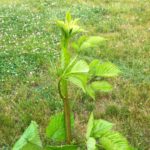
Tipping of primocanes (new vegetative canes from the ground) is an important management practice for summer bearing blackberries and black raspberries. Tipping the new primocanes causes lateral branching and most of the fruit production next year will be from buds on those lateral branches rather than buds off the main cane. Tipping also helps increase…Read more about Tipping bramble primocanes[Read More]
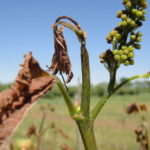
Growers across the state experienced some damage from frost and freeze events on May 7, 8, and 9. Damage is scattered across the state and ranges from minor to severe. We did not have damage in the Lafayette area, but areas of northern and northeastern Indiana were hit. Surprisingly some damage occurred in south central…Read more about Spring frost damage in grapes[Read More]
Remember that many chemical thinners don’t work very well when daily temperatures are below about 65 F. So here we are with warm days ahead, which means rapid fruit growth, perhaps up to 1 mm per day. Apple fruit here in Lafayette are about 12mm which leaves us some good options for chemical thinning. However…Read more about Apple Thinning[Read More]

What an unusual spring it’s been. We started out extremely early, then it was cool for a month or so with hardly any Growing Degree Day accumulation, then warm again (see Figure 1). Just when apple crops started to get in the window for chemical thinning (around 12 mm), it became cool again. The good…Read more about Spring Temperatures[Read More]
Grapes are at the 8-10 inch shoot stage in southern Indiana and 6 inches or less in northern Indiana. Brambles are blooming in the south and approaching first bloom in central and northern areas. Blueberries are at petal fall to full bloom across the state. There are a few reports of damage to grapes and…Read more about Crop Conditions[Read More]
One of the most critical management practices for grapes is crop load management through shoot and cluster thinning. Many varieties grown in Indiana tend to produce a large number of “non-count” shoots from adventitious buds and basal buds at count nodes. This can lead to excess crop and shading in the canopy. In addition, some…Read more about Shoot and Cluster Thinning Grapes[Read More]