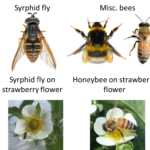
Insects provide an important pollination service in many crops including strawberry. Although strawberry flowers can self-pollinate without insects, it is well known that supplemental pollination by insects can result in better formed and larger fruit. Therefore, pollination services in strawberry affects both quantity (berry size) and quality (berry shape) of yield. By evaluating strawberry fruit…Read more about Fancy facts on strawberry pollination[Read More]
Found 896 Articles
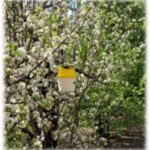
I hope the growing season is going well for all fruit producers! My team and several grower collaborators (thank you!) have been monitoring fruit insect pests this season in apple and blueberry, including codling moth, spotted-wing drosophila, and brown marmorated stink bugs. So, for this issue of Facts for Fancy Fruit I thought I would…Read more about Fruit insect monitoring updates[Read More]
Tissue analysis is the most reliable means of determining plant nutritional status. Combined with soil testing, tissue analysis can help pinpoint the source of problems and determine what measures may be needed to ensure proper nutrition of the crop. Tissue analysis samples should be collected at the appropriate time to give the most meaningful results….Read more about Tissue Analysis for Grapes & Small Fruit[Read More]


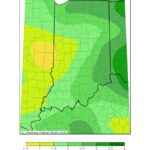
There is no shortage of weather to discuss this week! Heavy damage to buildings, trees, and powerlines was reported in northern Indiana as a result of the Derecho that occurred on June 13. Unfortunately, there was a fatality associated with the storm. Fort Wayne International Airport recorded a 98-mph wind gust, which broke their record…Read more about Storms, High Heat, Variable Precipitation, and Dryness[Read More]
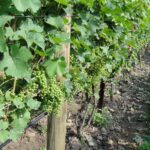
Now is the time to start thinking about leaf removal in grapevines. Cluster zone leaf removal can lower risk of disease, increase spray penetration and even improve fruit quality. The period immediately after bloom to 3 weeks post-bloom is the most effective time for leaf removal. Leaf pulling after this time can increase the risk…Read more about Timely Management | Grapevine Leaf Removal[Read More]
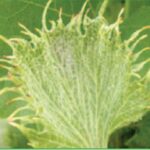
Pesticide Drift Grapes are particularly sensitive to growth regulator herbicides, such as 2,4-D and dicamba, which are widely used in corn and soybean production. These products can injure the vines, significantly reduce yields and contaminate the fruit even at extremely low rates. The most common symptoms of pesticide exposure include distortion of leaves and stunting…Read more about Pesticide Drift- Watch Out For Grapes[Read More]
Topics of July strawberry chat are Weed Control and Insect Pest Management. Our guests are Drs. Stephen Meyers and Samantha Willden, and Mr. David Doud. Dr. Meyers is an assistant professor and weed scientist at the Horticulture and Landscape Architecture Department. Dr. Meyers will discuss weed management and herbicide options in matted-row and plasticulture strawberry…Read more about Strawberry Chat — June Record and July Topics[Read More]
Purdue University prohibits discrimination against any member of the University community on the basis of race, religion, color, sex, age, national origin or ancestry, genetic information, marital status, parental status, sexual orientation, gender identity and expression, disability, or status as a veteran. This material may be available in alternative formats. 1-888-EXT-INFO Disclaimer: Reference to products in this publication is not intended to be an endorsement to the exclusion of others which may have similar uses. Any person using products listed in this publication assumes full responsibility for their use in accordance with current directions of the manufacturer.