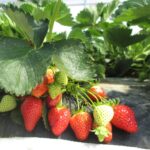
The next strawberry Chat will be on April 6, 12:00-1:00 pm EST. Dr. Bruce Bordelon will be our guest for the April 6 strawberry chat. We will discuss spring activities for the traditional way of growing strawberries, the matted-row system. Dr. Bruce Bordelon will share practical advice on growing strawberries in the matted-row system. You[Read More…]
Miranda Purcell

Late Spring freezes are becoming more and more common, and it is important to take action to prevent damage to your buds. A practice called double pruning can help avoid spring frost injury. Double pruning involves pruning the canes to 2-3x the desired amount of buds during the winter, which delays budbreak (and the risk[Read More…]
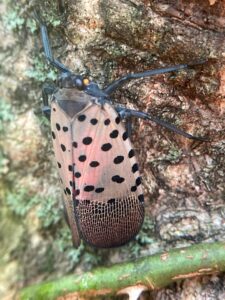
Adapted from IDNR Press release and Purdue Landscape Report The Spotted Lanternfly (SLF) has been found in Indiana A homeowner in Vevay, IN contacted DNR’s Division of Entomology & Plant Pathology (DEPP) last week with a picture of a red immature stage near their home. DEPP staff surveyed the site and discovered an infestation[Read More…]
Tissue analysis is the most reliable means of determining plant nutritional status. Combined with soil testing, tissue analysis can help pinpoint the source of problems and determine what measures may be needed to ensure proper nutrition of the crop. Tissue analysis samples should be collected at the appropriate time to give the most meaningful results.[Read More…]
WHAT: An Indiana Pesticide Clean Sweep Project designed to collect and dispose of suspended, canceled, banned, unusable, opened, unopened or just unwanted pesticides (weed killers, insecticides, rodenticides, fungicides, miticides, etc.) is being sponsored by the Office of Indiana State Chemist (OISC). This disposal service is free of charge up to 250 pounds per participant. Over[Read More…]
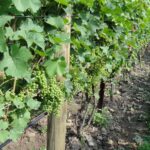
Now is the time to start thinking about leaf removal in grapevines. Cluster zone leaf removal can lower risk of disease, increase spray penetration and even improve fruit quality. The period immediately after bloom to 3 weeks post-bloom is the most effective time for leaf removal. Leaf pulling after this time can increase the risk[Read More…]

The periodical cicada (Figure 1) emergence is expected to begin shortly. Female cicadas lay eggs in 200+ woody tree species (Figure 2), and they have a strong preference for grapevines, apples, cherries, peaches, & plums. Egg laying can weaken and damage branches, causing them to turn brown, die, and break off. The loss of branches[Read More…]