There’s a saying that when life gives you lemons you make lemonade. Well, this year life has given us multiple spring frosts, so we have to make the best of the situation. Growers that have blocks with significant spring frost injury and very little crop may want to use this year to retrain vines, re-establish…Read more about Making lemonade in the vineyard[Read More]
Found 92 Articles
Are you a produce grower? Have you thought about produce your own value-added products that increase the value of your fresh produce? What are the challenges for you to start or expand your value-added business? How does COVID-19 affect your business? We would like to invite you to participate in the online survey to share…Read more about Value-Added Production among Indiana Produce Growers[Read More]
In perennial fruit crops, the orchard or vineyard floor is often divided into two distinct zones. Within the planted row portion of the field, weeds are managed- typically with herbicides. The between-row spaces or “row middles” consist of planted grass or native vegetation and facilitate the travel of equipment. Determining where the two zones meet…Read more about Considerations for Weed-Free Strip Width[Read More]
Spring’s arrival brings many wonderful experiences – including the opportunity for local consumers to pick farm-fresh produce onsite, learn more about local outlets through agritourism and enjoy time outdoors. The U-Pick season, as it’s known, is just around the corner for strawberries, blueberries, cherries and more. Now is the time to implement best practices to…Read more about Guide for U-pick producers / agritourism sites during the COVID-19 pandemic[Read More]
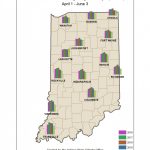
June Outlook Calling for Above-Normal Temperatures Beth Hall Indiana State Climate Office The month of May was sprinkled with a record-breaking freeze over Mother’s Day weekend, followed by heavy rainfall the following weekend, with a roller coaster of cool periods and extremely warm periods. We often think of spring as being that transition between winter…Read more about Climate and weather[Read More]
Due to the COVID crisis, all Purdue Extension meetings have been cancelled through June. After July 1, in-person meetings may be held and will follow state and local guidelines. Most Purdue Extension staff are working from home and we are available to answer your questions by email, phone or through social media. Our contact information…Read more about Extension Events[Read More]
The newest version of the SelectMax® herbicide label includes a change relevant to the state’s fruit growers. Previously limited to applications in non-bearing pome fruit crops, the newest label allows applications to be made to bearing pome fruits. The active ingredient in SelectMax® is clethodim, one of the commonly used grass-selective herbicides. Pome crops covered…Read more about SelectMax® Label Change Allows for Applications in Bearing Pome Fruits[Read More]
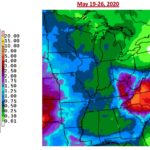
Two weekends ago, Indiana was facing freezing temperatures that broke numerous records across the state. This past weekend into early this week, the story has been lot of rain. As of the morning of Tuesday, May 19th, the northwest counties have received over 4 inches with a northwest to southeast gradient of decreasing amounts down…Read more about Climate and weather[Read More]
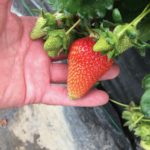
Fruit crops continue development with slow recovery from the freeze damage of May 9. In grapes, it is apparent that some varieties have the potential for a full crop despite significant damage. However, some are very slow to recover and it is doubtful that they will have much, if any crop this year. Apples in…Read more about Crop Conditions[Read More]
Cool, wet weather has complicated thinning decisions. Remember that thinning is all about supply and demand for carbohydrates in the tree. Natural fruit drop occurs when demand is high (many developing fruitlets needing carbohydrates to grow) and supply is limited (small leave area on the tree to supply carbohydrates through photosynthesis). Because of this shortfall…Read more about Chemical thinning of apples[Read More]
Purdue University prohibits discrimination against any member of the University community on the basis of race, religion, color, sex, age, national origin or ancestry, genetic information, marital status, parental status, sexual orientation, gender identity and expression, disability, or status as a veteran. This material may be available in alternative formats. 1-888-EXT-INFO Disclaimer: Reference to products in this publication is not intended to be an endorsement to the exclusion of others which may have similar uses. Any person using products listed in this publication assumes full responsibility for their use in accordance with current directions of the manufacturer.