June 26, 2018 Indiana Hort Society Summer Field Day Garwood Orchard, LaPorte, IN Contact Lori Jolly-Brown ljollybr@ purdue.edu October 17, 2018 Indiana Flower Growers Conference Daniel Turf Center Contact Lori Jolly-Brown ljollybr@ purdue.edu January 8, 2019 Illiana Vegetable Growers Symposium. Teibel’s Family Restaurant, Schererville, IN Contact Liz Maynard emaynard@purdue.edu https://ag.purdue.edu/hla/Extension/Pages/IVGS.aspx February 12-14, 2019 Indiana Hort…Read more about Upcoming Events[Read More]
Grapes
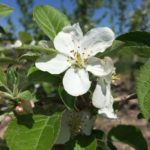
What a difference a couple of weeks of warm weather makes. Crop development is progressing rapidly with warmer weather. Apples in the south are around 10 mm, and in full bloom here in Lafayette. Peaches in southern areas of the state are still in the shuck, but barely. Folks in southern areas are getting ready…Read more about Crop Conditions[Read More]
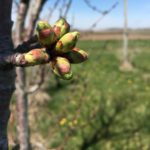
Fruit crops are finally starting to grow in the Lafayette area after a few days of warmer weather. Apples are at 1/2 inch green to tight cluster. Peaches have 1/2 inch vegetative shoots. There are no live flower buds in our planting. Cherries are at swollen bud. Early grapes varieties are at swell. Raspberries have…Read more about Crop Conditions[Read More]

“Spring” might be too strong a word to describe conditions this year. As we see from Figure 1, we’re now officially the latest spring so far this decade, and about the same as the long-term average. Having said that, a good part of our Growing Degree Day accumulation has come from one warm day on…Read more about Spring 2018[Read More]
There are some potential pest and disease problems that require early season sprays. Phomopsis is a major problem on many grape varieties in the Midwest. Mancozeb should be applied starting at 1-3 inch shoots and repeated each 7-10 days, especially prior to a predicted rain event. Evaluations of delayed-dormant fungicide applications for management of this…Read more about Early Season Sprays for Grapes[Read More]
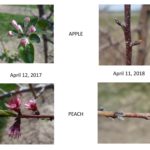
For organisms that don’t regulate their temperature (such as plants and insects), the rate of development is largely controlled by the temperature of their environment. As we know, fruit trees and vines need a certain amount of “winter chilling” that they use to measure when winter is over. After the chilling period, plant development depends…Read more about Plants and Temperature[Read More]
Early spring is a good time to make the first herbicide application of the year. There are several options for fruit crops including both pre- and post-emergent herbicides. See the weed control chapter in the 2018 Midwest Fruit Pest Management Guide for a complete list of products. In most situations, there will be some emerged…Read more about Spring Weed Management in Fruit Crops[Read More]
A new Monsanto-backed company is on the verge of producing the first fruit made with a blockbuster gene-editing tool that could revolutionize agriculture In a move aimed at securing its future, Monsanto has invested $125 million in a gene-editing startup called Pairwise. The alliance could tee up Monsanto, long known for its controversial dealings with…Read more about The First Fruit Made with a Blockbuster Gene-editing Tool[Read More]
The New York Times reports China has proposed countermeasures to a proposed $60 billion in tariffs from the U.S. on Chinese-made products. The Chinese Ministry of Commerce issued the threat in an online statement. American goods including nuts, wine, and fresh fruit would be subject to 15% tariffs. The Times reports these proposed tariffs in…Read more about China Proposes 15% Tariff on Fresh Fruit, Wine[Read More]