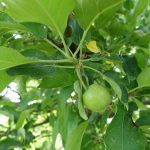
Apple crops are looking dismal around the state. Here in Lafayette we probably have about 20% of a crop, and I’m hearing similar things around the state. With a short crop, growers need to decide whether it’s worth protecting the fruit that are present with a full pesticide program, or writing the crop off and…Read more about Apple crop[Read More]
Pome Fruits
Due to the COVID crisis, all Purdue Extension meetings have been cancelled through June. After July 1, in-person meetings may be held and will follow state and local guidelines. Most Purdue Extension staff are working from home and we are available to answer your questions by email, phone or through social media. Our contact information…Read more about Extension Events[Read More]
Due to the COVID crisis, all Purdue Extension meetings have been cancelled through June. After July 1, in-person meetings may be held and will follow state and local guidelines. Most Purdue Extension staff are working from home and we are available to answer your questions by email, phone or through social media. Our contact information…Read more about Extension Events[Read More]
The newest version of the SelectMax® herbicide label includes a change relevant to the state’s fruit growers. Previously limited to applications in non-bearing pome fruit crops, the newest label allows applications to be made to bearing pome fruits. The active ingredient in SelectMax® is clethodim, one of the commonly used grass-selective herbicides. Pome crops covered…Read more about SelectMax® Label Change Allows for Applications in Bearing Pome Fruits[Read More]
Cool, wet weather has complicated thinning decisions. Remember that thinning is all about supply and demand for carbohydrates in the tree. Natural fruit drop occurs when demand is high (many developing fruitlets needing carbohydrates to grow) and supply is limited (small leave area on the tree to supply carbohydrates through photosynthesis). Because of this shortfall…Read more about Chemical thinning of apples[Read More]
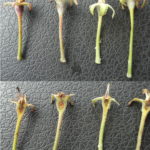
We’re still in May and already it’s been a very challenging year for many growers. Freezing temperatures blanketed much of the state April 15-17 and again more recently on May 9. Damage ranges from moderate to extreme. Even a week after the most recent freeze, damage is still not obvious unless you cut fruit. Fruit…Read more about Freeze damage[Read More]
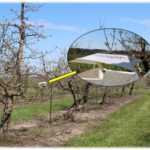
The horticultural entomology team is happy to report that we’re continuing efforts to support Indiana apple growers by monitoring tree fruit pests and reporting what we find! On April 22, 2020, we placed pheromone-baited monitoring traps for two important tree fruit pests, the codling moth and Oriental fruit moth at the Meigs Purdue Agricultural Center…Read more about Ready, Set, Monitor! Traps are set to detect key pests of tree fruit: Codling moth and Oriental fruit moth[Read More]
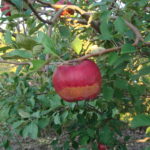
As we’ve talked about previously, once winter chilling is fulfilled, the rate of tree growth and development is largely dependent on temperature. This is clearly evident in the data over the last 10 years (see Figure 1). In 2012, we had an extremely early and warm spring, rapid accumulation of Growing Degree Days, and very…Read more about Spring temperatures[Read More]
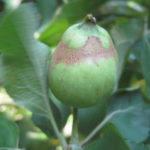
The recent spate of cool, wet weather has left one organism happy, Venturia inaequalis, the fungus that causes apple scab. Most of the state just underwent an extreme scab period, and unfortunately, few of us could do anything about it because of the combination of rain and wind. The revised Mill’s table (from http://www.fruit.cornell.edu/tfabp/revmills.htm )identifies…Read more about Apple Scab[Read More]
Due to the COVID crisis, all Purdue Extension meetings have been cancelled until further notice. Some may be offered by distance education, but no in-person meetings will be allowed. Most Purdue Extension staff are working from home. We are available to answer your questions by email, phone or through social media. Our contact information is…Read more about Extension Events[Read More]