From 2022 to 2024, we evaluated the performance of 15 June-bearing strawberry cultivars grown in a plasticulture system using black and white-on-black plastic mulches at two locations in Indiana: the Southwest Purdue Agricultural Center in Vincennes, IN, and the Meigs Horticulture Research Farm in Lafayette, IN. During the experimental period, monthly average temperatures at the…Read more about Performance of 15 June-bearing Strawberry Cultivars Grown in Plasticulture System for Two Seasons in Indiana[Read More]
Strawberry

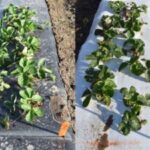
From 2022-2024, we evaluated the performance 15 strawberry cultivars grown in plasticulture system using black and white-on-black plastic mulches (Figure 1) at two locations: Southwest Purdue Agricultural Center in Vincennes, IN (USDA hardiness zone 6b), and Meigs Purdue Agricultural Center in Lafayette, IN (USDA hardiness zone 6a). Strawberries were harvested for two seasons. Plug plants…Read more about Performance of Strawberries on Black vs. White Plastic Mulches in Indiana[Read More]
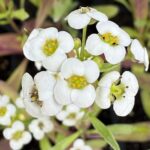
Spring is in full swing in our research high tunnels at Purdue. Overwintering strawberries that we planted in September are now in full bloom and fruits are being harvested. But as temperatures increase and crops become more productive, we also see the emergence of various insect pests. Aphids, amongst other soft-bodied insect pests (e.g., whiteflies,…Read more about Observations on the Companion Plant: Sweet Alyssum[Read More]
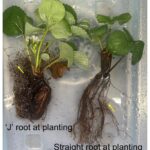
Bare-root strawberry plants often arrive with roots that are 6 to 10 inches long. For optimal planting, the roots should be kept straight, which requires digging a deep hole or using specialized tools. If the planting hole is too shallow, the roots may bend and form what is known as a ‘J-root’. You may have…Read more about ‘J’ Rooting of Bare-root Strawberry Plants[Read More]
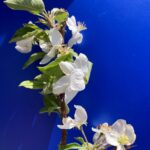
Hello! This is our third crop conditions update this season. The fruit trees are progressing well as things get up and going around the farm. Most everything has passed 1 or more stages of growth since the third week of this month. Monday the 28th marked our first fungicide application in the vineyard, with the…Read more about Crop conditions[Read More]
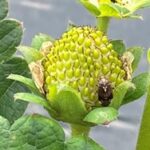
Lygus is a genus of insects within the family Miridae (Order: Hemiptera, piercing-sucking true bugs) that often feed on common horticultural crops. These small insects have rather large eyes, heavily patterned, neutrally colored wings, and long spindly antennae. The diet of Lygus bugs, as they are colloquially called, is incredibly diverse ranging from cotton and…Read more about Lygus bugs[Read More]
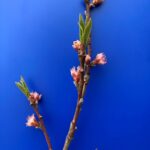
Welcome to our second update of crop conditions this season. Since the start of the month, our peach trees and plums have bloomed. The hard frosts we had out here last week killed many of those flowers as shown in the plum photo. They still have more yet to open, so not all is lost!…Read more about Crop conditions[Read More]
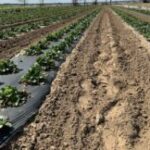
Crop Status Plug plants set on black plastic mulch in late summer and early fall are approaching full bloom. Some early blooms may have been damaged by recent low temperatures. Moving forward, growers should remain vigilant in protecting these crops from potential frost injury (Figure 1). Bare-root plants that were planted on white plastic during…Read more about Plasticulture Strawberry Update from Southern Indiana[Read More]
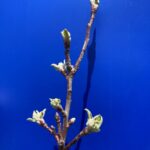
Welcome to Spring! Things have begun to green up here at Meigs as we’ve had some warmer weather and plenty of rain. Consequently, this week has been a push to make our first-of-season herbicide and fungicide applications in the orchard. Though we breached 80F a couple times already, our fruit trees and brambles do not…Read more about Crop Conditions[Read More]