This year, the strawberry season throughout Indiana seems to be early by about 10 days to 2 weeks, regardless of the production system. In southern Indiana, I heard the harvest lasted from mid/late April until mid-May in some fields. In central I ndiana, the harvest started in mid-May and is nearing its end in early…Read more about Do June-bearing Strawberries still Harvest in June?[Read More]
Strawberry
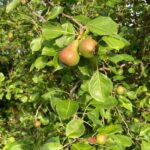
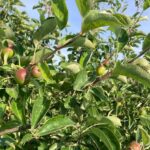
Everything here at the Meigs Horticulture Farm in Lafayette, Indiana seems to be off to a great start of fruit development. We have had an abundance of Strawberries the last two weeks and will for the next few weeks. We were able to find a handful of peaches on our trees.. no more than a…Read more about Crop conditions at Purdue Meigs Horticulture Farm[Read More]

According to the newly released 2022 Census of Agriculture, Indiana has 248 farms growing strawberries, a 25% increase from 2017 when there were 199 such farms. This rise is particularly notable because the number of strawberry farms had decreased from 250 to 199 between 2012 and 2017. Despite the increase in the number of farms…Read more about Indiana Strawberry Production Census[Read More]
A new episode of the Strawberry Chat podcast is available. In this episode, we talked with Dr. Marvin Pritts from Cornell University. We discussed the new edition of the Strawberry Production Guide for the Northeast, Midwest, and Eastern Canada. Dr. Marvin introduced us to the plasticulture day-neutral strawberry product system he has been researching recently….Read more about Discussion with Dr. Marvin Pritts about Strawberry Production in the Northeast[Read More]
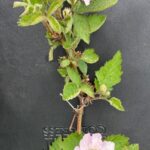
All of our fruit trees at the Meigs Horticulture Facility have a lot of fruit despite the late frosts we had this spring. We have been busy applying our cover sprays and even had to thin our Apples. We will also have a lot of Strawberries this year, they are starting to turn red this…Read more about Crop Conditions[Read More]

As we head into the strawberry season, I anticipate more questions from growers when it comes to pests that directly damage the fruit. One that was reported recently was the Strawberry sap beetle. This beetle belongs to the family Nitidulidae, which are broadly referred to as sap or picnic beetles. The Strawberry sap beetle overwinters…Read more about Strawberry sap beetles (Stelidota geminata)[Read More]
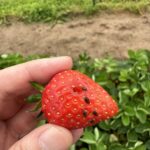
Removing overwintering leaves on plasticulture strawberries in the early spring is a time-consuming and labor-intensive job. I was asked whether the effort is worthwhile. I want to share my observation that confirms it is worth the effort. We conducted a comparative study on second-year plasticulture strawberries at Southwest Purdue Ag Center in Vincennes, IN. In…Read more about Why You Should Remove Old Leaves on Plasticulture Strawberries[Read More]
Dear Strawberry Chat Listeners, We will talk with Dr. Marvin Pritts on Wednesday, May 1st, 12:00-1:00 pm EST. Dr. Pritts is a professor in the horticulture department at Cornell and a very well-known expert in the strawberry industry. Many of you may have heard and read the book Strawberry Production Guide for the Northeast, Midwest,…Read more about Strawberry Chat with Dr. Marvin Pritts[Read More]
In addition to frost protection, disease management is pivotal during the blooming stage, particularly concerning gray mold (caused by Botrytis spp.) and Anthracnose. To protect the fruit, fungicide application should commence at or even before blooming. The pressure of both diseases is heavily influenced by weather conditions, with Botrytis favoring wet and cool climates and…Read more about Strawberry Disease Management Considerations at Blooming and Fruiting[Read More]