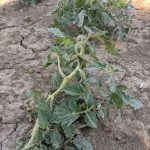
Dicamba has been in the headlines the last two weeks. In case you’ve missed it, here are the highlights: On June 3 the United States Court of Appeals for the Ninth Circuit ruled against the Environmental Protection Agency and its 2018 registration of over-the-top dicamba products Xtend, Engenia, and FeXapan and vacated their registrations. The…Read more about Dicamba Herbicide Updates and New Resources Stephen L. Meyers and Bill Johnson[Read More]
Disease Management
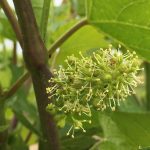
Frost injury this spring has created a situation where grapes have a few primary shoots, some secondary shoots, and many non-count basal and latent shoots. This puts shoots at various stages of development and creates problems for growers. Regardless, some varieties are are at or nearing bloom on surviving primary shoots, which is a key…Read more about Important grape sprays[Read More]
The newest version of the SelectMax® herbicide label includes a change relevant to the state’s fruit growers. Previously limited to applications in non-bearing pome fruit crops, the newest label allows applications to be made to bearing pome fruits. The active ingredient in SelectMax® is clethodim, one of the commonly used grass-selective herbicides. Pome crops covered…Read more about SelectMax® Label Change Allows for Applications in Bearing Pome Fruits[Read More]
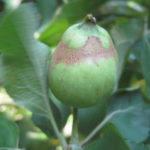
The recent spate of cool, wet weather has left one organism happy, Venturia inaequalis, the fungus that causes apple scab. Most of the state just underwent an extreme scab period, and unfortunately, few of us could do anything about it because of the combination of rain and wind. The revised Mill’s table (from http://www.fruit.cornell.edu/tfabp/revmills.htm )identifies…Read more about Apple Scab[Read More]
Due to the COVID crisis, all Purdue Extension meetings have been cancelled until further notice. Some may be offered by distance education, but no in-person meetings will be allowed. Most Purdue Extension staff are working from home. We are available to answer your questions by email, phone or through social media. Our contact information is…Read more about Extension Events[Read More]
Late spring freezes and severe winter cold regularly causes stone fruit crop losses to approach100%. With this level of irregular cropping, disease management must focus on protecting foliage to ensure a good potential crop for next year, while reducing over wintering spore loads. Copper is fairly phytotoxic to peaches and should be avoided. Bravo is…Read more about Managing Diseases on Stone Fruits[Read More]
Grapes are in the early stages of growth across the state, from bud break to 4 to 6 inch shoots. Significant frost and freeze damage occurred in central and southern areas so that will set growth back a couple of weeks as the secondary buds break. With a reduced number of primary shoots, protection of…Read more about Early season management of grape diseases and insect pests[Read More]
As this outbreak unfolds, please feel free to contact me with any questions by phone or email. I am so grateful for the essential and important work that you all do and will help and support you in any way I can. In the meantime, I’ll provide you with the updated information on plant diseases…Read more about Peach Disease Management 2020[Read More]
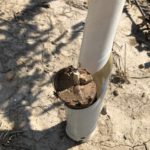
Rootstocks, Replant, and Reconsiderations Replant disease is a term that describes reduced productivity and ‘failure to thrive’ of new plantings of trees back into orchards of the same or closely related tree fruit (or nut) crops. Historically, it has been referred to as ‘soil sickness, soil exhaustion, replant disorder, and replant problem’. Regardless of name,…Read more about Rootstocks, Replant, and Reconsiderations[Read More]
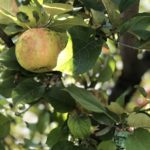
The symptoms of sooty blotch and flyspeck (SBFS) have begun to make their appearance. I know this because 1). I’m starting to see spots (Fig 1, 2 & 3). We have accumulated MORE THAN enough hours of post- petal fall leaf wetness needed for infection to occur, despite the sudden drought conditions. First, what is…Read more about Seeing Spots[Read More]