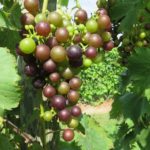
Grape harvest has began in the southern part of the state and will begin in central areas over the next week or so. Early varieties are nearing full maturity while late varieties are just at, or not yet at veraison. Overall fruit quality looks excellent. Apple harvest continues. Summer varieties are mostly done and early…Read more about Crop conditions, current growth stages[Read More]
Insect Management
Populations of spotted wing drosophila continue to increase. As best I can tell, numbers are not at the devastating levels that they were a couple of years ago, but there are still plenty around to cause very serious injury to small fruit. Raspberry, blackberry, and blueberry growers should be on a regular spray program at…Read more about Spotted Wing Drosophila[Read More]
This pest has been extremely common in many locations this year. They can cause defoliation of a number of fruit crops and can be especially devastating to young trees, so they need to be controlled to prevent losses. They also like to feed on most of the small fruits, early maturing varieties of apples, and…Read more about Japanese Beetles[Read More]
Mites continue to be a concern for both fruit and vegetable growers. We are just now at the historical peak population time for European red mites. Fruit growers should be scouting their more susceptible blocks regularly for the next few weeks. The thresholds for treatment increase as we get later in the season. See https://extension.entm.purdue.edu/publications/E-258/E-258.html…Read more about European Red Mites[Read More]
I continue to catch low numbers of codling moths in my pheromone traps. As I explained in a previous FFF article, in the lower Midwest, we don’t have distinct generations. Out moth catches seldom go down to zero, so there is always a threat for codling moth. Apple growers should be sure that they are…Read more about Codling Moth[Read More]
Japanese beetles have emerged and are actively feeding on our fruit crops. This pest, which used to be the primary insect pest of most small fruits, is no longer the serious pest it used to be, but can still cause problems in localized areas. Small fruit growers who are spraying for SWD control will likely…Read more about Japanese Beetles[Read More]
Both the timing and the weather is right for outbreaks of European red mites right now. Apple growers should be scouting their most susceptible varieties or blocks now. If you find problems, you should scout your entire orchard. There is a good chance that the infestation does not encompass your whole orchard, so only spray…Read more about European Red Mites[Read More]
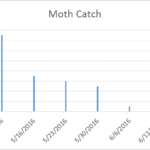
Most growers know that codling moths in the lower Midwest do not behave the same as codling moths in more northern apple growing areas. We usually do not have distinct generations. Here is a graph showing my weekly pheromone trap catches at the Meigs Farm near Lafayette. Notice that the counts have never gone down…Read more about Codling Moth[Read More]
We caught our first spotted wing drosophila adults in traps in Elkhart County over the weekend. We can assume that they will be flying and laying their eggs in developing fruit of grape, raspberry, blackberry, and blueberry from this point until the end of the season. In addition to checking traps, growers should be inspecting…Read more about Spotted Wing Drosophila[Read More]
It’s time for apple growers to begin looking for European red mites. ERM can be a serious problem, reducing the yield and quality of this year’s crop as well as reducing fruit buds for next year. Most growers know the area of their orchard where they first see ERM problems. Generally, populations will start to…Read more about European Red Mites[Read More]