One of the first and most important parts of a good insect and mite management program is the application of an early season oil spray to control European red mites, San Jose scale, and several species of aphids. Scales overwinter on the tree as nymphs and European red mites and aphids overwinter as eggs. Because…Read more about Oil Sprays[Read More]
Insect Management
The 2017 growing season has officially started as vines are budding out. As we go through the next couple of weeks, it is important to realize that some potential pest and disease problems require early season sprays. The first is Phomopsis, a major problem on many grape varieties in the Midwest. Mancozeb should be applied…Read more about Early Season Sprays for Grapes[Read More]
One way insects communicate with individuals of the same species is with pheromones. Pheromones are volatile chemicals released by an insect that usually can be detected only by individuals of the same species. There are a number of different types of pheromones, but the most common type is the sex pheromone. Usually the females will…Read more about Pheromones and Pheromone Traps[Read More]

As the spray season approaches, it is good to remember the profound impact water quality has on the performance of pesticides used by fruit growers. Purdue Pesticides Program recently published a guide, The Impact of Water Quality on Pesticide Performance PPP-86, available at the Education Store, 1-888-EXT-INFO or www.extension.purdue.edu/store/. I highly recommend this guide to…Read more about Effects of Water Quality of Pesticides[Read More]
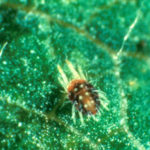
Managing Mites in a BMSB World For several decades, apple growers in Indiana and elsewhere in the Midwest have used a highly effective system to manage European red mites that is based on conservation of the predatory mite, Amblyseius fallacis, along with timely applications of either preventive or rescue miticides. The rationale behind this approach…Read more about Managing Mites in a BMSB World[Read More]

“During the past few years considerable complaint has been made in this state of the loss of apples through rotting.” George P. Clinton, 1902. It’s been quite a season for rot. High temperatures, coupled with regular rains created a perfect storm of summer rots. If you were one of the orchards with problems, you need…Read more about End of season thoughts on rots[Read More]
I am still catching significant numbers of codling moths in my pheromone traps. That means that they are still mating and laying eggs on fruit. Even though you may be well into the harvest period, don’t forget that those later varieties still need to be protected from codling moth. Don’t forget to pay close attention…Read more about Codling Moth[Read More]
We just completed a new publication that will assist fruit and vegetable growers in protecting pollinators while still managing their insect pests. The title is “Protecting Pollinators in Fruit and Vegetable Production.” It can be found at https://extension.entm.purdue.edu/publications/POL-2/POL-2.html. There are two companion publications in this series, “Protecting Pollinators in Home Lawns and Landscapes” and “Protecting…Read more about New Pollinator Publication[Read More]
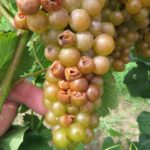
Grape harvest is underway in the southern part of the state, and early varieties have been harvested in central Indiana. The recent storms and heavy rains could not have come at a worse time, especially for varieties near harvest, and tight clustered varieties such as Vignoles, Seyval Valvin muscat, etc. Excess rain causes fruit…Read more about Grapes: The Sour Rot Situation[Read More]
Spotted wing drosophila continue to plague raspberry, blackberry, blueberry, and grape growers. I have had some reports of poor control. There are a number of reasons that control of any insect may be poor. If you are not getting the level of control you expect, here are a few things to consider. Is your sprayer…Read more about Spotted Wing Drosophila[Read More]