
The periodical cicada (Figure 1) emergence is expected to begin shortly. Female cicadas lay eggs in 200+ woody tree species (Figure 2), and they have a strong preference for grapevines, apples, cherries, peaches, & plums. Egg laying can weaken and damage branches, causing them to turn brown, die, and break off. The loss of branches…Read more about Protect your grapevines from cicadas[Read More]
Disease Management
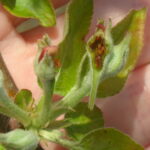
Freeze: There really isn’t much that can be added to the wonderful and unfortunately timely article about Frost. Critical Temperatures and Frost Protection by Rob Crassweller at https://extension.psu.edu/frost-critical-temperatures-and-frost-protection With a frost to freeze expected to cover most of the state on April 21 and 22, there will certainly be crop damage and loss (Fig. 1)….Read more about Freeze[Read More]
A natural wonder will occur in 15 states this year: the emergence of the Brood X, 17-year periodical cicadas! Also known as “17-year or 13-year locusts” the last mass emergence of these insects occurred in 2004. Now, 17 years later, the immature cicadas will emerge from the ground, molt one last time to gain wings,…Read more about Plan ahead to protect young fruit trees from 17-year periodical cicadas emerging in May[Read More]
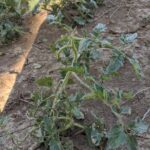
A special project group of the North Central Integrated Pest Management (IPM) Center wants to learn about your concerns and experiences with herbicide drift. The group is surveying growers of fruits, vegetables, and other specialty crops in the upper Midwest. To truly understand the frequency, severity, and economic impact of herbicide drift on specialty crops,…Read more about Grower Survey to Assess Herbicide Drift Damage in the North Central U.S.[Read More]
Did you know that almost half of the food we consume every day comes from crops the USDA categorizes as “minor” or “specialty” crops? Compared to the acreage of corn and soybean in the Midwest, fruit and vegetable crops are only a small percentage of crops grown. Not surprisingly, agrochemical companies focus their effort on…Read more about The IR-4 Project and Indiana Growers[Read More]
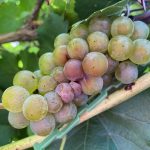
Late season fruit rots: Sour rot complex, Botrytis and Ripe rot are major concerns in the Midwest. Though it’s been pretty dry across much of the state recently, some untimely rains can lead to disaster. Once berries split due to rain, yeasts and bacteria quickly invade damaged fruit, leading to rots that attract fruit flies….Read more about Late season disease management in grapes[Read More]
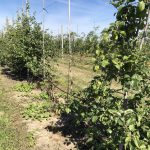
Modern clonal rootstocks are the foundation-and literal roots– to modern apple growing. These rootstocks ensure growers have orchards of relatively small trees that can be densely planted and result in earlier and greater bearing than what was historically possible. This is an obvious improvement over waiting multiple decades for an orchard to become profitable. However,…Read more about Rootstock problems are neither new nor unique…” Cummings and Norton, 1974[Read More]
Michigan State University is seeking help to conduct a survey for QoI/FRAC 11 resistant powdery mildew populations around the Great Lakes region. MSU and FRAME are seeking your help to conduct this survey. Please contact Nancy Sharma, a plant pathology graduate student, at sharm115@msu.edu if you are interested in helping us. You will receive a…Read more about Grapevine powdery mildew fungicide resistance survey[Read More]
Due to the COVID crisis, most Purdue Extension meetings will be held virtually. Most Purdue Extension staff are working from home and are available to answer your questions by email, phone or through social media. Our contact information is at the end of the newsletter. July 30, 2020 Small Farm Education Field Day and Webinar…Read more about Extension Events[Read More]
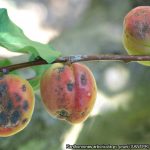
Warm, wet weather has led to an uptick in bacterial shot hole disease, caused by the bacterium Xanthomonas arboricola pv. pruni (XAP). We started to see a significant uptick in shot hole on peaches, nectarine and plum before conditions turned dry. Leaves and fruit susceptibility to XAP infection decreases after pit hardening (if you were…Read more about XAPped again![Read More]